 Blaine Siding
 Windows Built for Life Near the Water in Birch Point
Birch Point sits close enough to Semiahmoo Bay and the Strait of Georgia that the weather off the water shapes almost every exterior decision a homeowner makes, and windows are no exception. Salt-laden air, wind-driven rain that hits window walls sideways rather than straight down, and a moss season that can stretch from fall through spring all put steady stress on window frames, seals, and glazing. A window that would hold up fine twenty minutes inland in Blaine's more sheltered neighborhoods can fail years early out here if it wasn't chosen and installed with this specific exposure in mind.
"Custom" in this context doesn't just mean a fancy shape or an oversized picture window, though we do plenty of that too. It means matching the frame material, glazing package, and installation detailing to what Birch Point's climate actually does to a house, and building openings that fit rooflines, additions, or older framing that isn't always standard-sized.
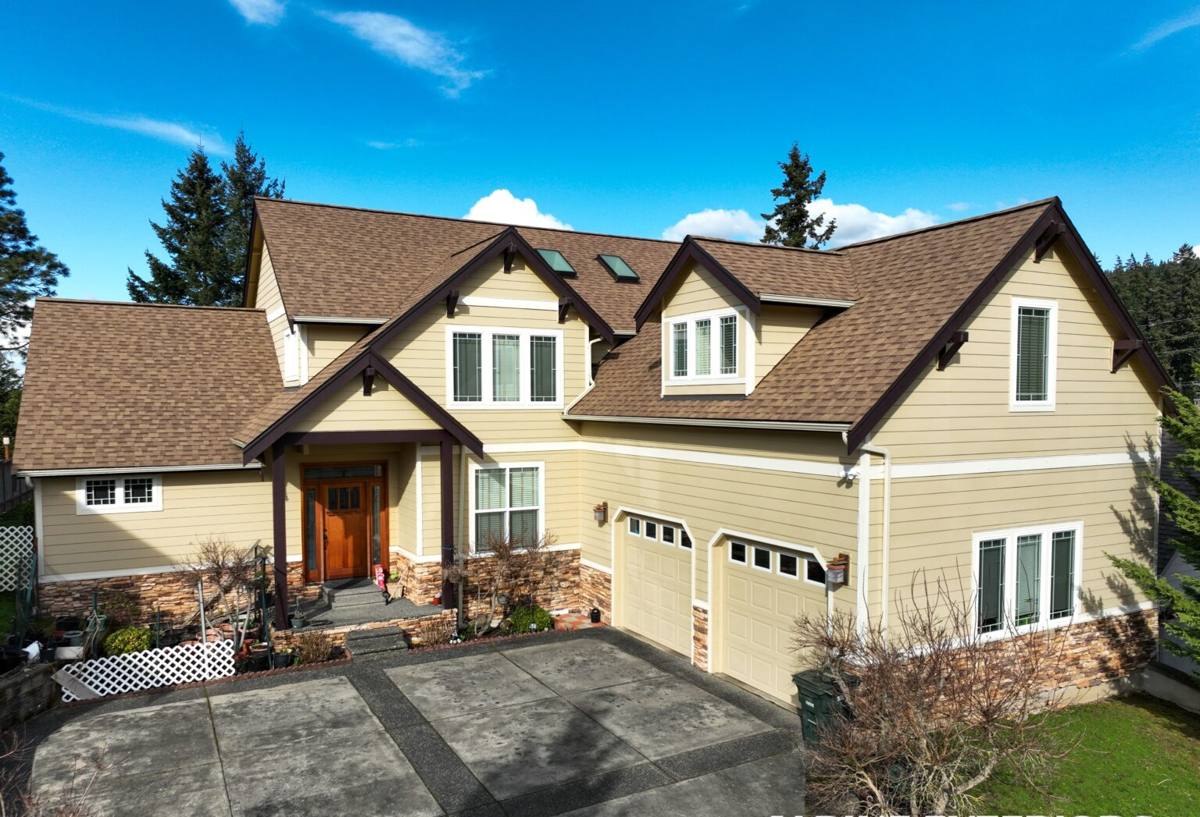
What Whatcom County's Coastal Climate Does to Windows
Salt Air
Airborne salt from the bay settles on exterior surfaces and accelerates corrosion on anything with exposed metal — hardware, hinges, weep hole screens, and lower-grade aluminum components. It also breaks down some sealants and finishes faster than the manufacturer's inland-tested warranty assumes. Homes with a direct view of the water see this first, usually on the weather-facing elevation.
Driving Rain
Rain that comes in at an angle, pushed by wind off the water, tests a window's water management differently than a straight vertical downpour. It finds its way into gaps in flashing, undersized sill pans, or sealant joints that were adequate for a more sheltered lot but aren't enough here. Most window leaks we're called out to trace back to installation detailing, not the window unit itself.
Moss and Sustained Moisture
Whatcom County's long damp season keeps humidity elevated around window openings for months at a time. Moss and algae can take hold on sills, trim, and shaded frame edges, holding moisture against wood and painted surfaces and shortening the life of anything that isn't detailed to shed water and dry out between rains.
Choosing the Right Frame Material for a Birch Point Exposure
There's no single "best" window material for every house — it depends on sun and wind exposure, how close you are to the water, your maintenance appetite, and budget. Here's how the common options actually perform in this environment.
| Frame Material | Salt Air Performance | Maintenance | Notes for Birch Point |
|---|---|---|---|
| Vinyl | Good — won't corrode | Low | Solid value option; verify UV and weld quality on exposed elevations |
| Fiberglass | Excellent — very stable, resists corrosion | Low | Handles temperature swings and coastal exposure well; higher upfront cost |
| Aluminum-clad wood | Fair to good, depends on cladding quality | Moderate | Attractive interior wood look; cladding and flashing detail matters a lot here |
| Bare wood | Poor without diligent upkeep | High | We steer most direct-exposure homes away from bare exterior wood in this climate |
| Standard aluminum | Poor — prone to corrosion and condensation | Moderate to high | Generally not our recommendation for water-facing walls |
We're not against wood-look products — we just frame the decision honestly. A clad or composite product that gives you the look you want without bare wood exposed to salt spray and standing moisture will almost always outlast the alternative and save you a repaint or refinish cycle down the road.
Hardware and Fasteners
Even a well-chosen frame can be let down by cheap hardware. On any custom window package we spec for a waterfront or near-waterfront property, we pay attention to corrosion-resistant hinges, locks, and fasteners rather than the standard-grade parts that come on a builder-basic unit.
Glazing and Weatherproofing Choices That Matter Here
Glass and gas-fill packages get a lot of marketing attention, but for Birch Point homes the details that actually extend a window's service life are less glamorous:
- Low-E coatings appropriate for the Pacific Northwest's cloudy, moderate climate rather than a hot-sun-market coating
- Argon or krypton gas fill for insulation value, with attention to seal quality since it's the seal — not the glass — that fails first in coastal air
- Warm-edge spacer systems that resist condensation at the glass edge, which matters when humidity stays high for months
- Multi-point locking hardware on operable units, both for weather-tightness and added security on wind-driven days
- Corrosion-resistant weep systems so any water that does get into the frame track has somewhere to go instead of sitting there
For homes with a direct sightline to the water, we'll also talk through impact considerations and heavier-duty glazing on the most exposed elevation — not because it's required everywhere, but because it's worth discussing when a wall takes the brunt of every storm off the bay.
Why Installation Detailing Matters More Than the Window Itself
We say this to every Birch Point homeowner because it's the single biggest factor in whether a window lasts: a high-end window installed with poor flashing will leak, and a mid-range window installed correctly will outperform it. Water management around the opening is what actually keeps rain out, not the sticker on the glass.
What a correct installation includes
- A sloped sill pan that directs any intruded water back outside instead of into the wall cavity
- Properly lapped flashing tape and building wrap integration, shingle-style from bottom to top so water always sheds downward and outward
- Backer rod and quality exterior sealant at the right joints — not sealant used as a substitute for correct flashing
- Shimming and squaring that keeps the window operating smoothly and the weatherstripping compressing evenly for years, not just on install day
- Interior air sealing so conditioned air doesn't drive moisture into the wall assembly from the inside out
On a home exposed to driving rain off the water, we treat the flashing and sill detail as the part of the job that actually determines whether you're back to dealing with water stains in three years.
Our Process for a Birch Point Window Project
1. On-site assessment
We look at each opening individually — sun exposure, wind direction, existing water damage or moss buildup, and how sheltered or exposed that particular wall is. A house set back from the water with tree cover needs a different approach than one with an open shot toward the strait.
2. Material and glazing recommendation
Based on that assessment, we walk you through frame material, glazing package, and hardware options with honest trade-offs — cost, maintenance, and expected service life in this specific climate, not a one-size-fits-all pitch.
3. Precise measurement
Custom openings, older framing, and additions built at different times don't always line up with stock sizes. We measure and order to the actual opening rather than forcing a standard size to fit.
4. Removal and installation
Old units come out carefully, framing is checked for hidden rot or water damage before the new window goes in, and flashing and sealing are done to the standard described above — every layer, every time, not just on the elevations that show.
5. Final inspection and walkthrough
We check operation, seal, and finish work with you before we consider the job done, and explain any care specific to the materials you chose.
Signs Your Current Windows Are Losing the Fight
Coastal exposure tends to show up gradually, then all at once. Worth a look if you're seeing:
- Fogging or moisture between the panes, meaning the seal has failed
- Soft, discolored, or moss-covered sills and lower frame edges
- Drafts or noticeable temperature difference near the window on windy days
- Hardware that's stiff, corroded, or won't lock cleanly anymore
- Paint or finish peeling faster on the water-facing side of the house than elsewhere
- Visible gaps in old caulking or flashing around the frame
Why a Crew That Already Works Birch Point Is Worth It
A contractor who's done work on this stretch of Blaine already knows which elevations tend to take the worst of the weather, what kind of flashing detail holds up here versus what fails within a few seasons, and how Whatcom County's damp, mossy climate behaves differently from a drier inland job. That's not something you can fully substitute with a generic install checklist — it comes from having actually stood on ladders in this wind and traced actual leaks back to their source in homes like yours. It also means straightforward answers about what your specific exposure calls for, instead of upselling every job to the most expensive option regardless of need.
If you're weighing custom windows for a Birch Point home, we're glad to take a look and give you a straightforward, no-pressure estimate — what we'd recommend for your exposure, what it would involve, and honest cost ranges before you decide anything. Use the form below to get started.