 Blaine Siding
 Siding Built for Custer's Coastal Climate
Custer sits close enough to the Strait of Georgia and Drayton Harbor that homes here deal with a very specific mix of weather stress: salt-laden air blowing in off the water, long stretches of driving rain through fall and winter, and short winter days that keep north-facing walls damp for weeks at a time. That combination is hard on siding in ways that don't show up right away. It shows up five, ten, fifteen years in, as soft trim, peeling paint, swollen panel edges, and moss creeping up from the ground line.
We replace siding on homes throughout the Blaine and Custer area, and we install one product: James Hardie fiber cement. Not because it's the only option on the market, but because after years of pulling failed siding off Whatcom County homes, it's the one we're willing to warranty and put our name behind in this specific climate.
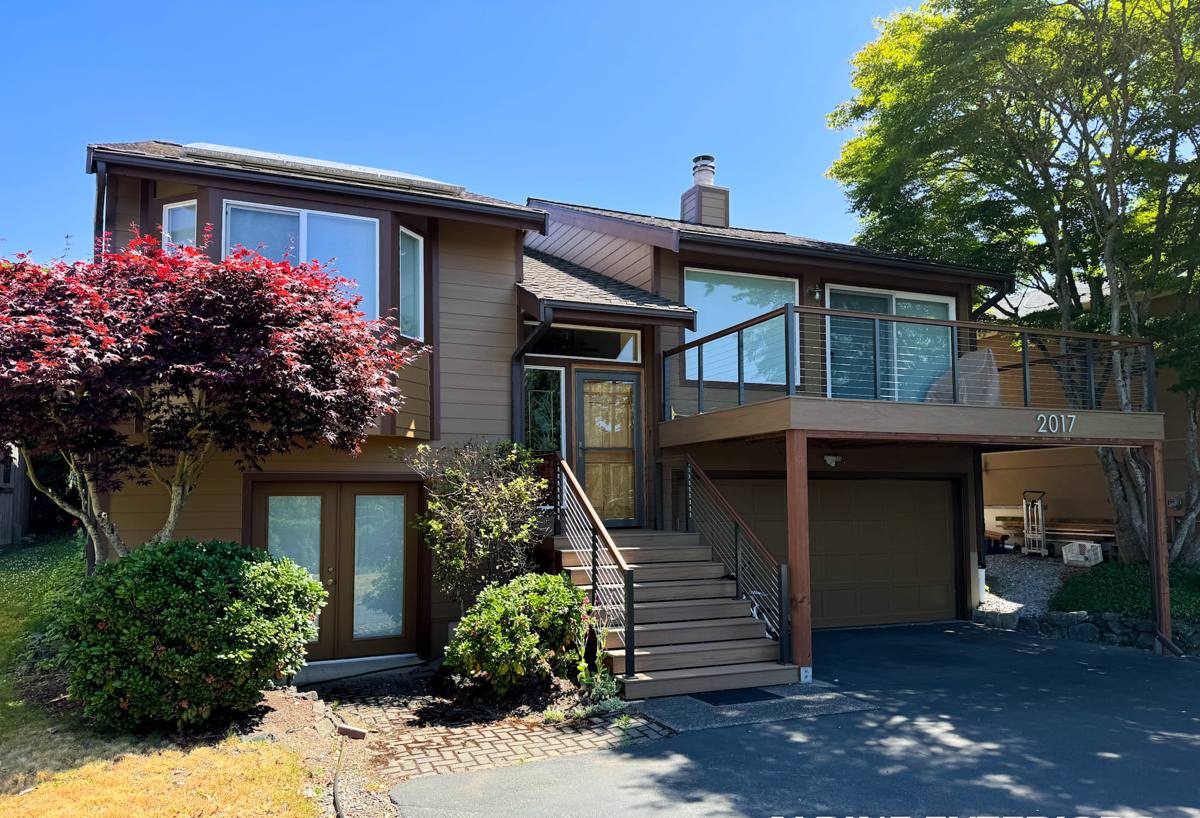
What Salt Air, Rain, and Moss Actually Do to Siding
Salt Air
Airborne salt is corrosive and hygroscopic — it draws moisture out of the air and holds it against whatever surface it lands on. On wood-based siding products, that means the surface stays damp longer than it would a few miles inland, which accelerates rot at seams, fastener heads, and cut edges. On metal fasteners and trim accessories, salt exposure speeds up corrosion unless the hardware is rated for it.
Driving Rain
Custer's exposure to weather moving in off the water means rain here often arrives at an angle, not straight down. Wind-driven rain gets pushed up under laps, into unsealed joints, and behind poorly flashed trim. Siding that depends on paint film or caulk alone to stay watertight is more likely to let moisture in over time than a system designed with drainage and flashing built into the installation.
Moss and Prolonged Dampness
Shaded, north-facing walls and areas near tree lines stay damp for extended stretches during Whatcom County's wet season. Moss and algae take hold on surfaces that don't dry out quickly, and once established, they hold even more moisture against the substrate underneath. On products sensitive to moisture, that's a slow path toward soft spots and structural damage. On the right material with the right finish, it's mostly a cosmetic issue that a rinse resolves.
Why We Install Only James Hardie Fiber Cement
James Hardie siding is cement-based, not wood-based, which changes its relationship with water entirely. It doesn't absorb moisture and swell, it doesn't feed rot fungus, and it isn't a food source for insects. For a property exposed to salt air and sustained rain, that's the difference between siding that ages predictably and siding that fails from the inside before the paint ever shows a problem.
Hardie's HZ5 product line is engineered specifically for regions with more moisture exposure and freeze-thaw cycling, which fits western Whatcom County's climate profile well. The ColorPlus factory finish is baked on under controlled conditions, which holds up to UV and moisture exposure more consistently than field-applied paint — and it means touch-up and repainting cycles are longer than what most other siding materials require.
We're not going to tell you every other siding product is junk — vinyl, engineered wood, and other fiber cement brands all have a place in the market. But we've made a professional decision to standardize on one system we trust completely, install correctly every time, and stand behind with a real warranty. That's a narrower offering than a contractor who installs whatever a homeowner asks for, and we think it's the more honest one.
What a Correct Siding Replacement Actually Involves
Siding replacement isn't just removing old boards and nailing up new ones. In a climate like Custer's, the work that happens underneath the visible siding matters as much as the siding itself.
- Full removal of old siding down to the sheathing, not an install over existing material
- Inspection of the sheathing for rot, soft spots, or water damage from the old system
- Repair or replacement of any damaged sheathing and framing before new siding goes on
- Installation of a weather-resistive barrier (house wrap) with correctly lapped and taped seams
- Proper flashing at every window, door, and roof-to-wall intersection
- Rain screen or drainage gap installation where called for, so any moisture that gets behind the siding has a way out
- Correct fastener placement and spacing per Hardie's installation specifications
- Proper clearance between siding and grade, decks, and roof lines to keep the bottom edge out of standing moisture
- Sealed and caulked joints at trim, corners, and penetrations using exterior-rated sealant
Skipping any one of these steps is how siding jobs fail early — and it's almost always invisible to the homeowner until years later, when the damage is already done.
Our Process for Custer Siding Replacement Projects
1. On-Site Assessment
We walk the exterior with you, looking at existing siding condition, trim, window flashing, and any areas showing moss growth, staining, or soft spots — common tells for moisture problems on homes in this area.
2. Scope and Product Selection
We talk through Hardie's plank, shingle, and panel options, plus color and texture choices from the ColorPlus line, so the finished look fits the home and the neighborhood.
3. Tear-Off and Substrate Repair
Old siding comes off completely. Any rot or damage found underneath gets repaired before anything new goes up — no covering up existing problems.
4. Weather Barrier and Flashing
House wrap, flashing, and drainage details go in first, since this is the layer that actually keeps water out long-term, siding included.
5. Hardie Installation to Manufacturer Spec
Panels, fasteners, and joints are installed to James Hardie's published specifications — the details that protect the transferable warranty and the long-term performance of the siding.
6. Final Walkthrough
We review the finished work with you, including caulking, trim details, and touch-up, before calling the job complete.
Why Local Experience in Custer and Whatcom County Matters
Siding installation isn't identical everywhere. A crew that mostly works drier inland climates may not think twice about drainage planes, moss-resistant clearances, or flashing details that matter enormously a few miles from the water. A crew that works Custer, Blaine, and the surrounding Whatcom County coastline regularly already knows which walls take the worst weather exposure, where moss tends to establish first, and how much clearance to leave at grade so the bottom course of siding doesn't sit in damp soil through the winter.
That local pattern recognition doesn't replace following the manufacturer's installation manual — it adds to it. It's the difference between a technically correct install and one that's actually tuned to how this specific area's weather behaves.
Cost Factors for a Custer Siding Replacement
Every home is different, but the following factors typically drive the cost of a siding replacement project in this area:
| Factor | Why It Matters |
|---|---|
| Home size and wall complexity | More square footage, corners, and gables mean more material and labor time |
| Substrate condition | Rot or water damage found during tear-off adds repair work before new siding can go on |
| Siding profile and finish | Lap, shingle, and panel styles, plus color selection, affect material cost |
| Trim and accessory scope | Fascia, corner boards, and window trim replacement add to the total scope |
| Access and site conditions | Steep grades, tight lot lines, or difficult staging areas affect labor time |
| Removal and disposal | Tear-off and haul-away of old siding material is part of a full replacement |
We provide a detailed, itemized estimate after the on-site assessment so you know exactly what you're paying for and why — no vague lump-sum guessing.
Signs Custer Homeowners Should Watch For
- Persistent moss or algae growth that returns quickly after cleaning
- Soft or spongy siding, especially near the ground line or under windows
- Paint that's peeling, bubbling, or chalking faster than it should
- Visible gaps, warping, or buckling in siding panels or trim
- Staining below window sills or at panel seams, a sign of water tracking behind the siding
- Rising energy bills that may point to compromised insulation behind failing siding
Any one of these on its own might be minor. Several together, especially on walls facing prevailing wind and rain, usually mean it's worth having someone take a real look before small problems become structural ones.
If you're seeing any of these signs on your Custer home, or you're just planning ahead for a siding replacement, we're happy to come take a look. The estimate is free, there's no pressure, and you'll get a straight answer about what your home actually needs — just fill out the form below to get started.