 Blaine Siding
 Metal Roofing Built for Everson's Weather, Not Just Its Curb Appeal
Everson sits inland from Blaine but still gets the full weather package that defines this corner of Whatcom County: salt-tinged air pushing in off the Strait, long stretches of driving rain through fall and winter, and a moss season that seems to start earlier every year. A roof here isn't just protecting a house from sun and heat the way it might in a drier climate — it's holding back moisture almost year-round. Metal roofing, installed correctly, handles that job better than most other materials available to homeowners in this area. Installed poorly, it fails in exactly the spots this climate is hardest on: fasteners, flashing, and anywhere two roof planes meet.
This page is about metal roofing specifically for Everson properties — what the local conditions demand, what a correct installation actually involves, and how we approach the work when we're on your roof.
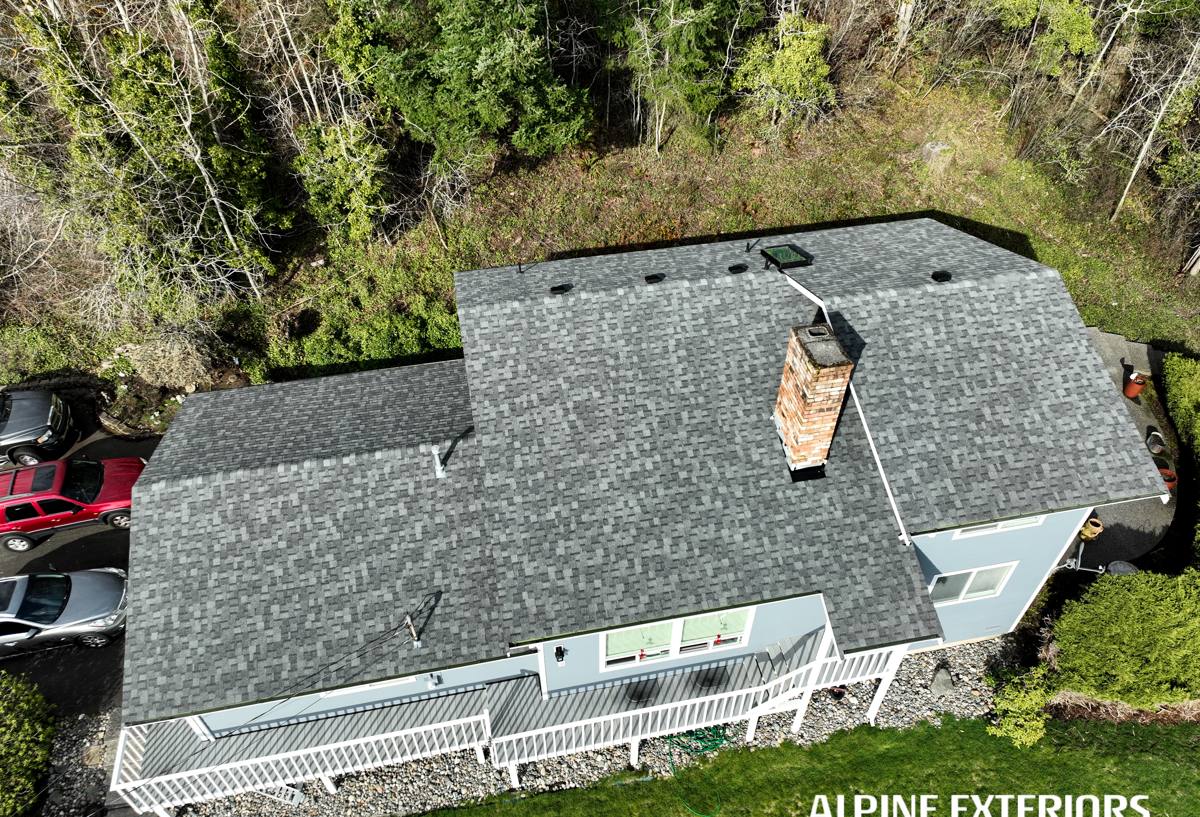
What Salt Air, Driving Rain, and Moss Season Actually Do to a Roof
Salt Air and Metal Corrosion
Everson isn't oceanfront, but it's close enough to the Strait of Georgia and Puget Sound that salt-laden air reaches inland on a regular basis, especially with prevailing westerly winds. Salt accelerates corrosion on any exposed metal — fasteners, flashing edges, cut panel ends. This is why the coating and fastener spec on a metal roof matter more here than they would fifty miles inland. It's not a reason to avoid metal roofing; it's a reason to spec it correctly.
Driving Rain and Wind-Driven Water
Rain in this region rarely falls straight down. Wind pushes it sideways and up under laps, edges, and poorly sealed penetrations. A roof that would shed water fine in a calm climate can leak here if the underlayment, laps, and flashing details aren't built for wind-driven water specifically. This is one of the biggest differences between a roof that performs for twenty-plus years and one that starts showing interior stains within a few winters.
Moss Season
Cool, damp, shaded conditions for much of the year make Whatcom County prime moss territory. Moss holds moisture against a roof surface, works into seams and laps, and on some materials it can lift edges and accelerate deterioration. Metal roofing doesn't stop moss from landing on it, but its smooth, hard surface gives moss far less to grip than shingles or wood, and it sheds what does grow much more easily during routine maintenance.
Metal Panel Options: What Actually Fits an Everson Home
Not every metal roofing product is the same product wearing a different name. The panel style, fastening method, and coating all affect how the roof handles this specific climate.
| Panel Type | How It's Fastened | Best Fit For | Climate Note |
|---|---|---|---|
| Standing seam | Concealed clips, no exposed fasteners | Homes wanting the longest low-maintenance lifespan | Fewer penetration points means fewer places for wind-driven rain to find a way in |
| Exposed-fastener panels | Screws through the panel face, with washers | Budget-conscious projects, outbuildings, some main roofs | Washers age and fastener backouts are the most common source of leaks over time — needs periodic inspection |
| Stone-coated steel | Nailed or screwed, overlapping profile | Homeowners who want a shingle or shake look with metal's underlying durability | Textured surface can hold moss and debris slightly more than smooth panel — needs the same seasonal attention as any roof |
For most Everson homes, we lean toward standing seam when the budget allows, specifically because it minimizes the number of exposed fasteners exposed to salt air and repeated wet-dry cycling. That's a maintenance-and-longevity call, not a knock on exposed-fastener systems — they have a legitimate place on outbuildings, additions, and tighter budgets, and can perform well when installed correctly and checked periodically.
What a Correct Metal Roof Installation Involves
A metal roof is only as good as what's underneath it and how the details are executed. The panel itself is the easy part.
Underlayment
Given how much wind-driven rain this area sees, we don't treat underlayment as an afterthought. A synthetic or self-adhered underlayment rated for the exposure gives the roof a real second line of defense if wind pushes water past the panel laps — which happens even on well-installed roofs during the worst storms.
Fastening and Laps
Fastener spacing, torque, and lap direction all affect how well a roof resists wind uplift and water intrusion. Laps need to run with the prevailing weather pattern, not just whatever is convenient for the crew that day.
Flashing at Valleys, Walls, and Penetrations
Most metal roof leaks don't happen in the open field of the panels — they happen at valleys, chimney and vent penetrations, and where the roof meets a wall or dormer. These are the details that separate a roof that lasts decades from one that needs repairs within a few years.
Ventilation
Metal roofs need proper attic or roof-deck ventilation just like any other roofing material. Trapped moisture underneath the deck causes rot and mold regardless of what's on top of it, and it's a completely avoidable problem with correct venting.
Our Process on an Everson Metal Roofing Project
- On-site inspection. We look at the existing roof deck, current flashing, ventilation, and any signs of past moisture or moss damage before quoting anything.
- Honest scope and options. We'll walk you through panel type, coating, and underlayment options relevant to your home and budget — including where we'd recommend spending more and where it's not necessary.
- Deck prep. Any soft, rotted, or moisture-damaged decking gets addressed before a single panel goes down. Installing new roofing over a compromised deck just hides the problem.
- Underlayment and flashing first. These go in before panels, sequenced to shed water correctly at every lap, valley, and penetration.
- Panel installation. Fastened and lapped to the spec appropriate for the panel type and this area's wind and rain exposure.
- Final walkthrough. We check seams, flashing, and fastener lines before we consider the job done — not just from the ground, but on the roof.
Maintenance: What Everson Homeowners Should Actually Do
Metal roofing is low-maintenance compared to other materials, not no-maintenance. A little seasonal attention goes a long way in this climate.
- Clear overhanging branches and debris that trap moisture against the roof surface
- Check and clean gutters before the fall rains start — clogged gutters back water up under lower panel edges
- Look for early moss growth in shaded, north-facing sections and remove it before it spreads
- Inspect exposed fasteners (if applicable) every couple of years for backout or washer wear
- Check flashing around chimneys, vents, and skylights for gaps after major storms
- Avoid pressure washing metal panels — it can drive water under laps and damage coatings
Cost Factors on an Everson Metal Roof
| Factor | Why It Matters |
|---|---|
| Panel type | Standing seam generally costs more upfront than exposed-fastener panels but requires less long-term maintenance |
| Roof complexity | Valleys, dormers, and multiple roof planes mean more flashing work and labor time |
| Deck condition | Rot or moisture damage found during tear-off adds repair cost but prevents bigger problems later |
| Underlayment grade | Higher-exposure underlayment costs more but matters given this area's wind-driven rain |
| Access and pitch | Steeper roofs or tight lot access affect labor and staging time |
We'll never quote a metal roof project without walking the actual roof first — the honest range depends entirely on what we find on your house.
Why a Crew That Already Works Around Blaine and Everson Matters
A roofing crew that regularly works Whatcom County knows what this area's rain and moss do to a roof over five, ten, and twenty years — not just how a panel looks on installation day. That shows up in small decisions: which underlayment grade is worth the extra cost here, where flashing tends to fail first on homes with this area's typical roof pitches, and how much ventilation a house actually needs given the region's humidity. It also means a crew that's reachable if a storm causes damage and you need someone who already knows your roof, not a company working from another region that has to relearn the house from scratch.
Ready to Talk Through Your Roof?
If you're weighing metal roofing for a home in Everson or elsewhere near Blaine, we're happy to take a look and walk you through what your specific roof needs — no pressure, no hard sell. Fill out the form below for a free estimate and straight answers about panel options, timeline, and cost.