 Blaine Siding
 Why Deck Building Is Different Here Than It Looks in a Catalog
A deck built from a generic plan set works fine in a dry climate. In Ferndale, a deck sits under a different set of pressures for most of the year — wind-driven rain off the water, salt air that speeds up corrosion on anything metal, and a moss and mildew season that can stretch from fall well into spring on shaded or north-facing sections. None of that shows up on a stock materials list, and it's exactly the kind of thing that separates a deck that looks good for one season from one that's still solid a decade later.
This page is about custom deck building specifically for Ferndale properties — what the local conditions actually demand from framing, fasteners, and decking material, what a correct build sequence looks like, and what to expect when you work with a crew that already builds decks in this part of Whatcom County rather than one seeing coastal Pacific Northwest conditions for the first time.
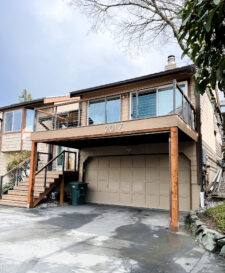
What Ferndale's Climate Does to a Deck Over Time
Salt Air and Corrosion
Proximity to the water means airborne salt settles on exposed metal — fasteners, brackets, railing hardware — and accelerates corrosion compared to an inland build. Standard construction screws and basic galvanized hardware can start showing rust streaks and pitting years before a well-specified fastener package would, and a corroding fastener at a structural connection is a much bigger problem than one at a surface trim board. This is one of the first things that should change in a coastal deck spec versus an inland one.
Driving Rain and Water Intrusion
Wind-driven rain doesn't just fall on a deck, it gets pushed sideways into joints, ledger connections, and post bases that a calmer climate would leave mostly dry. Ledger board attachment to the house — the single most safety-critical connection on most decks — needs proper flashing and a water-managed gap, not just lag bolts through the siding. Post bases that sit in standing water or hold moisture against end grain are a slow, steady path to rot even on decks that otherwise look fine from a distance.
Moss, Algae, and Shade
Whatcom County's long wet season grows moss and algae readily on any deck surface that stays damp and shaded, and a north-facing deck under mature trees can hold moisture for days after a storm has passed elsewhere. Beyond looking bad, moss growth holds water against the decking surface and can make boards slippery — a real concern on stairs and transitions. Board spacing, gap width, and airflow underneath the deck all affect how fast a surface dries out and how much moss pressure it sees.
Composite vs. Wood Decking: The Real Trade-Offs for This Climate
Both material families can work in Ferndale. The right choice depends on how much upkeep you want to do and how the deck is sited relative to shade and moisture exposure.
| Factor | Wood Decking | Composite Decking |
|---|---|---|
| Moisture behavior | Absorbs and releases moisture; needs sealing to manage swelling, checking, and rot in a wet climate | Doesn't absorb water into the board itself; more stable through wet/dry cycles |
| Moss and algae resistance | Bare or under-maintained wood is a good surface for moss to take hold, especially in shaded spots | Better resistance, but capped composite in a shaded, damp spot still needs regular cleaning |
| Maintenance | Periodic cleaning, sealing or staining, and inspection for soft spots or checking | Occasional washing; no sealing or staining required |
| Upfront cost | Generally lower material cost | Generally higher material cost |
| Appearance over time | Natural look that changes with weathering unless maintained on schedule | Consistent appearance over the life of the product when kept clean |
| Structural framing needs | Same coastal fastener and flashing standards apply regardless of decking choice | Same coastal fastener and flashing standards apply regardless of decking choice |
The framing underneath — joists, ledger, posts, and every fastener holding them together — needs the same corrosion-resistant treatment no matter which decking surface you choose. The decking material affects maintenance and appearance; the structure underneath is what actually determines how long the deck lasts and stays safe.
What a Correct Framing Package Looks Like Here
Fasteners and Hardware
For a coastal Whatcom County build, we treat corrosion-resistant fasteners and structural hardware as the standard, not an upgrade — stainless steel or heavy-coated hardware rated for the exposure the deck will actually see, particularly at the ledger connection, post bases, and any hardware that stays wet longer than the rest of the structure.
Ledger Attachment and Flashing
The ledger board — where the deck attaches to the house — is the connection most likely to fail badly if it's done wrong, and it's also the connection most exposed to wind-driven rain working its way behind it. Correct ledger flashing sheds water away from the house framing instead of trapping it against the rim joist, and that detail matters more here than in a drier climate where a mediocre ledger connection might go unnoticed for years.
Post Bases and Ground Contact
Post bases should keep wood end grain elevated off concrete or soil rather than sitting directly in standing water, and any hardware at grade needs to handle both moisture and the added corrosion pressure of salt-laden air. A post base that traps water against the post is a slow rot problem that's invisible until the post is compromised.
Joist Spacing and Airflow Underneath
Proper joist spacing and enough clearance underneath the deck for air to move keeps the structure drying out between rain events instead of staying damp for days, which directly affects both rot risk and how much moss and algae the deck sees over time.
Design Choices That Matter in a Wet, Coastal Climate
- Board spacing wide enough to drain quickly without becoming a hazard for narrow shoe heels or dropped items
- Stair and landing surfaces detailed for slip resistance, since moss and algae make smooth wet surfaces genuinely dangerous
- Railing hardware matched to the same corrosion-resistant standard as the structural fasteners, not just the visible decking
- Thoughtful siting relative to shade and tree cover where the design allows, since a deck in full shade under trees will always fight moss harder than one with better sun exposure
- Proper drainage away from the house foundation at grade-level decks, so the deck doesn't create a moisture problem for the structure it's attached to
Our Process for a Ferndale Deck Build
1. On-Site Assessment
We walk the site to look at grade, drainage, sun and shade exposure, the condition of the house wall where the ledger will attach, and any existing structure being replaced. This is also where we talk through what you actually want the deck to do — entertaining space, a quiet spot off a bedroom, stairs down to a yard — since layout follows function.
2. Design and Material Selection
We go over decking and railing material options with the real trade-offs for your specific site, not a generic pitch, and settle on a layout, size, and material package that fits your budget and how the deck will be used.
3. Permitting
Most deck builds in Whatcom County require a building permit, and elevated decks in particular have specific structural requirements around footings, ledger attachment, and railing height that inspectors check. We handle permit submission and coordinate inspections as part of the build rather than leaving that step to the homeowner.
4. Framing and Structural Work
This is where the coastal-specific decisions get built in — corrosion-resistant fasteners, proper ledger flashing, post bases set correctly, and joist spacing that supports both the decking material and long-term drainage underneath.
5. Decking, Railing, and Finish Work
Decking goes down with the spacing and fastening pattern appropriate to the material, railing gets installed to code height and spacing, and any finish work — post caps, fascia, stairs — gets completed and inspected.
6. Final Walkthrough
We walk the finished deck with you, confirm everything meets what was discussed, and go over any maintenance expectations specific to the material you chose.
Cost Factors for a Ferndale Deck Project
| Factor | How It Affects the Project |
|---|---|
| Size and shape | Larger decks and those with multiple levels, angles, or built-in features take more material and labor |
| Height and stairs | Elevated decks need more substantial framing, guardrails, and stair structures than ground-level decks |
| Decking material | Wood costs less upfront; composite costs more upfront but less in ongoing maintenance |
| Ledger and site conditions | Difficult access, existing structure removal, or wall repair needed at the ledger connection add time |
| Railing and hardware selection | Coastal-grade corrosion-resistant hardware and higher-end railing systems cost more than basic options |
| Permitting requirements | Elevated or larger decks typically involve more detailed plan review and inspection steps |
Why Local Build Experience Matters for This
A crew that already builds decks around Ferndale and the rest of Whatcom County has already worked through the fastener specs, flashing details, and siting decisions that a coastal climate demands — it's not something they're figuring out for the first time on your project. That experience shows up in the details that don't get noticed until they fail: the ledger flashing that actually sheds water, the post base that doesn't trap moisture, the fastener package that isn't rusting five years in. A deck that's engineered for a drier inland climate and simply transplanted here is more likely to need early repairs at exactly those connection points.
Maintaining a Deck in This Climate
- Sweep debris and standing leaves off the deck surface regularly, especially in fall, since trapped organic matter holds moisture and feeds moss growth
- Clean composite or wood decking on a regular schedule to stay ahead of algae and moss rather than scrubbing it off once it's established
- Inspect and re-seal wood decking on the schedule the product calls for; skipping a cycle in a wet climate accelerates weathering
- Check railing and structural hardware periodically for early signs of corrosion, particularly if the deck is closer to the water
- Keep the area underneath the deck clear so air can keep circulating and moisture doesn't sit trapped against the framing
If you're planning a new deck or replacing one that's showing its age, we're glad to walk your property, talk through what actually makes sense for your site and budget, and give you a straightforward, no-pressure estimate. Reach out below to get started.