 Blaine Siding
 Window Installation Built for Ferndale's Coastal Climate
Ferndale sits close enough to the water and low enough in the Nooksack lowlands that its homes take a steady beating from moisture year-round. Salt-laden air off the Strait of Georgia and Bellingham Bay works its way into window hardware and finishes. Driving rain off the Pacific pushes water sideways into gaps that would stay dry in a calmer climate. And the long, gray stretch from fall through spring keeps north-facing frames and sills damp enough, long enough, for moss and algae to take hold. None of that is a reason to panic about your windows — it's just the baseline a correct installation has to be built for.
A window that's a perfect fit for a dry inland climate can still fail here if it's installed without attention to drainage, flashing, and sealant choice. Most of the problems we get called out to fix in Whatcom County aren't bad windows — they're good windows installed as if the weather were milder than it actually is.
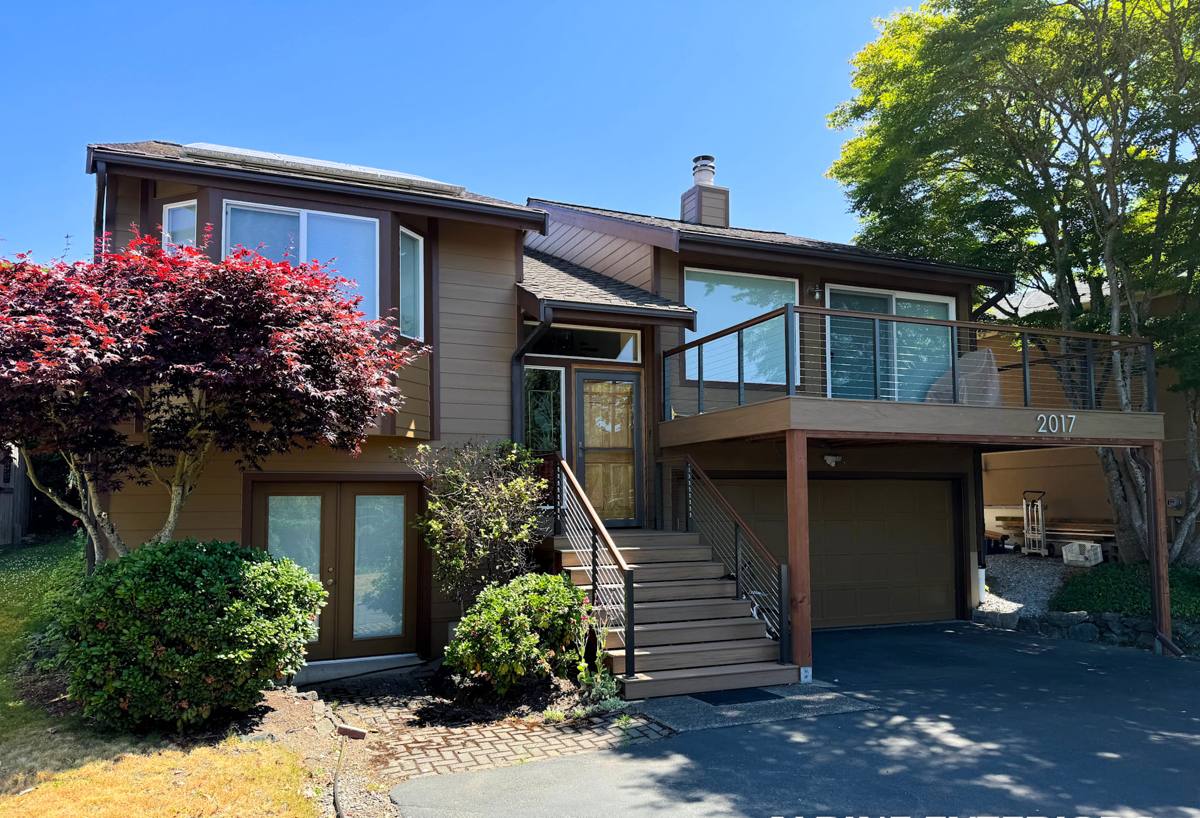
Signs a Ferndale Home Needs New Windows
Windows rarely fail all at once. They tend to give off warning signs for months or years before a homeowner notices the real cost — usually in the form of a heating bill, a stain, or a stuck sash.
- Fogging or a permanent haze between panes, meaning the seal on a double- or triple-pane unit has failed
- Soft, spongy, or discolored wood trim around the frame — a sign moisture is getting behind the casing
- Visible moss or green-black staining building up on sills, especially on north- and west-facing walls
- Windows that are hard to open, close, or lock, which often points to a frame that's swelled or warped
- Drafts you can feel with a hand near the frame on a windy day, even with the window shut and locked
- Noticeably higher heating costs compared to similar homes nearby, with no other explanation
Any one of these on its own might just need a repair. Several at once, especially on an older single-pane or early double-pane window, usually means replacement is the more honest recommendation.
What a Correct Window Installation Actually Involves
The window unit itself gets most of the attention, but in a climate like this one, the installation details matter as much as the product. A window is only as weather-tight as the flashing, sealant, and framing work around it.
Flashing and drainage
Every opening needs a drainage path so that any water that does get past the exterior cladding has somewhere to go besides your wall cavity. That means proper sill pan flashing, correctly lapped house wrap or weather-resistive barrier, and flashing tape installed in the right order — bottom to top, so each layer sheds water onto the one below it, not behind it.
Air and water sealing
Sealant has to be rated for exterior exposure and applied where it actually does something — around the perimeter of the frame, not just at the visible trim line. In a region with this much wind-driven rain, a bead of caulk that looks fine but was placed in the wrong spot is one of the most common reasons a "new" window still leaks.
Insulation and fastening
The gap between the window frame and the rough opening needs to be insulated without over-packing it, which can bow the frame and cause the sash to bind. Fasteners need to be corrosion-resistant, since salt air accelerates rust on standard hardware over time.
Choosing the Right Window for a Whatcom County Home
There's no single "best" window material — the right choice depends on your home's exposure, your budget, and how much upkeep you're willing to do. Here's how the common options compare against the conditions Ferndale homes actually face.
| Frame Material | Moisture & Salt Air Performance | Maintenance | Typical Trade-Off |
|---|---|---|---|
| Vinyl | Good — won't rot or corrode; seams are the main watch point | Low | Limited color/repaint options over time |
| Fiberglass | Very good — dimensionally stable in wet-dry cycling, resists warping | Low | Higher upfront cost than vinyl |
| Wood | Needs protection — attractive but vulnerable to moisture and moss if finish isn't maintained | High | Best appearance for period homes, most upkeep |
| Aluminum-clad wood | Good exterior protection with wood warmth inside | Moderate | Cladding seams need periodic inspection near the coast |
For homes with direct exposure to prevailing wind and rain — typically west- and south-facing walls — we lean toward materials and glazing packages that shrug off moisture with the least ongoing maintenance. For more sheltered walls, there's more room to prioritize appearance or budget.
Glazing and hardware
Double-pane, gas-filled units are the standard baseline for this climate; triple-pane adds a real but modest improvement in comfort and sound control, at extra cost. Whatever glazing you choose, ask about the corrosion resistance of the locks, hinges, and balance hardware — standard steel hardware in a salt-air environment tends to show rust within a few years, while stainless or coated hardware holds up far longer.
Our Window Installation Process
Every home is different, but the sequence stays consistent because it's built around what actually keeps water out in this climate.
- Assessment: We look at each opening individually — sun and wind exposure, existing damage, and whatever's driving the replacement, not just measure and quote.
- Measurement and product selection: Openings are measured precisely, and we talk through material, glazing, and hardware options against your budget and how exposed that wall is.
- Removal: The old window comes out carefully, and we inspect the rough opening and framing underneath for any hidden rot or moisture damage before anything new goes in.
- Repair as needed: Any damaged sheathing or framing gets addressed before installation — covering it up is how small problems turn into expensive ones.
- Flashing and installation: Sill pan, flashing tape, and the new window go in following the drainage-first sequence, with shimming and fastening done to keep the frame square and true.
- Sealing and insulation: Perimeter insulation and exterior-rated sealant are applied, then interior and exterior trim is finished to match your home.
- Final check: We test that every window opens, closes, and locks properly, and walk the job with you before we call it done.
What Affects the Cost of Window Installation
We won't quote a number without seeing the job, but these are the main variables that move a window installation estimate up or down.
| Factor | How It Affects Cost |
|---|---|
| Frame material | Vinyl is generally the most budget-friendly; fiberglass and wood-clad run higher |
| Glazing package | Triple-pane and specialty coatings add cost over standard double-pane |
| Window size and style | Larger openings and operable styles like casement or awning cost more than fixed or standard double-hung |
| Condition of the opening | Hidden rot or framing damage found during removal adds repair time before installation can proceed |
| Number of windows | Whole-home replacements typically bring a better per-window rate than one-off jobs |
| Trim and finish work | Matching existing interior trim or upgrading exterior trim adds labor |
The honest answer for most homeowners is that a full, itemized estimate after we've actually looked at your windows is more useful than a ballpark figure pulled out of thin air.
Mistakes We See in Past Window Installations
We're regularly called in after a previous installation, and the issues tend to repeat themselves. None of these are a knock on any particular product — they're almost always installation shortcuts, not the window's fault.
- Sealant used as the primary water barrier instead of proper flashing, which fails once the caulk ages and cracks
- House wrap or building paper lapped in the wrong direction, sending water behind the barrier instead of over it
- Windows shimmed unevenly, leaving them out of square and hard to operate within a year or two
- Standard hardware used on coastal-exposed walls, leading to premature rust and stuck locks
- Trim reinstalled tightly against the frame with no room for the window to expand and contract with temperature swings
Why Local Experience in Ferndale Matters
A window installer who mostly works drier, inland climates will still do fine work — right up until the first hard winter storm off the water finds the one detail they didn't think to plan for. Crews who regularly work Whatcom County's coastal edge already know which walls take the worst of the wind-driven rain, how fast moss builds up on shaded sills, and which hardware and sealant choices actually hold up here instead of failing in three years.
That experience also means fewer surprises during the job itself — knowing what condition to expect behind an older window opening in this climate, and having the right materials on the truck instead of discovering mid-project that a part needs to be special-ordered.
What to Ask Before You Hire
- Do you carry current liability insurance and, if applicable, workers' compensation coverage?
- Will you inspect the rough opening for hidden moisture or rot before installing, not just after a problem shows up?
- What flashing and sealing method do you use, and why, for a coastal-exposure wall?
- Is the installation itself warrantied separately from the manufacturer's product warranty?
- Can you walk me through the process step by step before work starts, not just hand me a quote?
If your windows are drafty, fogged, hard to operate, or just older than you'd like to admit, we're happy to take a look and give you a straightforward, no-pressure estimate — no pushy sales pitch, just an honest read on what your Ferndale home actually needs. Fill out the form below and we'll get in touch.