 Blaine Siding
 Grandview's Climate Is Harder on Siding Than Most Homeowners Realize
Grandview sits close enough to the water that salt air is part of daily life, and Blaine's weather doesn't do the siding on your house any favors either. Between wind-driven rain off the Strait, long stretches of overcast, shaded moisture, and a moss season that can run most of the year in the shadier spots, exterior cladding here works harder than it does 50 miles inland. Siding that's fine in a dry inland climate can start showing problems in Whatcom County within a few years — swelling at the bottom courses, paint failure, soft trim, moss creeping up from the foundation line. None of that is inevitable. It's a product and installation problem, and it's fixable with the right material put on the right way.
This page is about one specific job: replacing or installing fiber cement siding on a Grandview home. Not a general overview of siding options — the specifics of what this climate does to a house and what a correct fiber cement job looks like when it's done by a crew that already works this neighborhood.
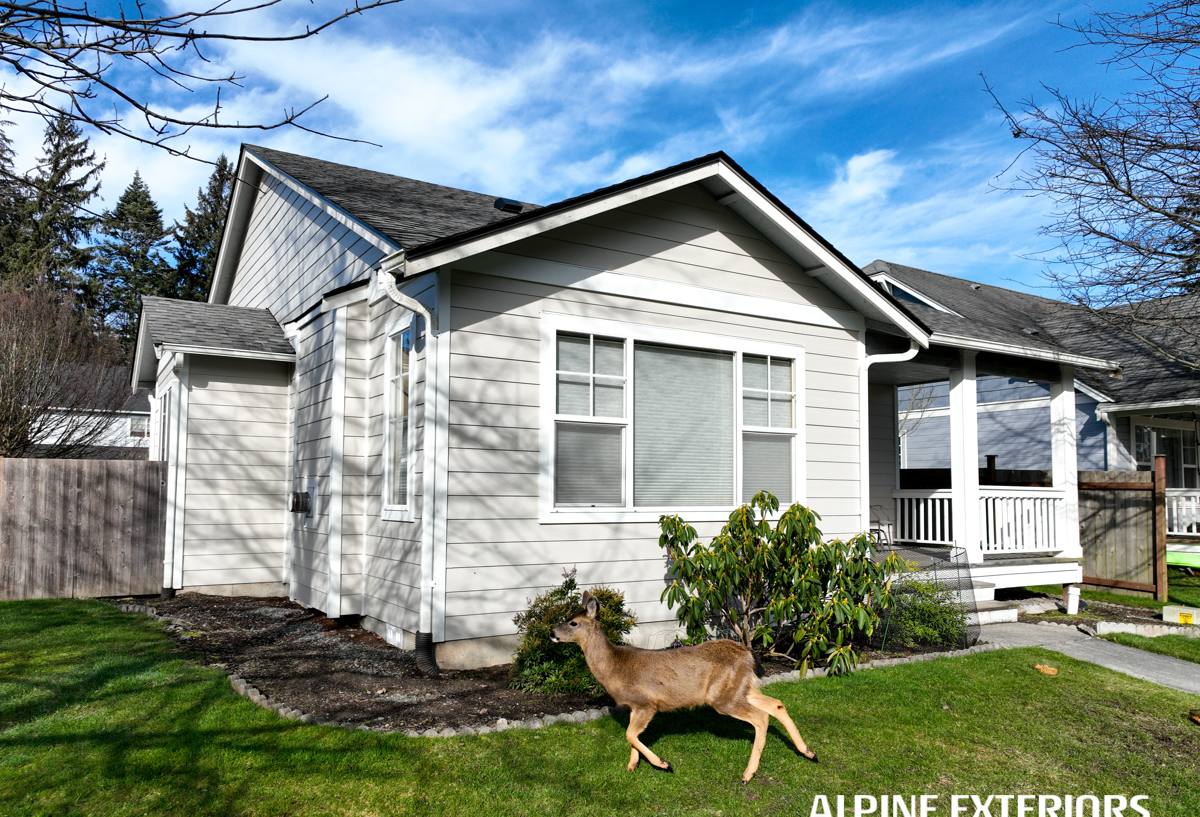
Why Fiber Cement Holds Up Where Wood and Vinyl Struggle
Salt Air and Corrosion
Airborne salt accelerates the breakdown of a lot of common siding materials and fastener systems. Untreated or under-protected wood trim absorbs salt-laden moisture and breaks down faster than it would inland. Cheaper fasteners corrode and stain the face of the siding. Fiber cement itself — cement, sand, and cellulose fiber — doesn't rot, rust, or corrode from salt exposure the way wood or bare metal trim can. That's the baseline reason it belongs on a home this close to the water.
Driving Rain and Water Management
Blaine gets rain that doesn't just fall straight down — wind pushes it sideways into wall assemblies, especially on west- and south-facing elevations that catch weather off the water. Siding that isn't installed with correct clearances, flashing, and drainage behind it will eventually let that water find a path in, no matter how good the material is. This is where installation quality matters as much as product choice.
Moss, Algae, and the Shade Problem
Grandview has plenty of mature trees and shaded north walls, which means damp, low-light conditions that moss and algae love. On wood siding, moss holds moisture directly against the material and speeds up rot. On fiber cement, moss and algae are a surface and appearance issue rather than a structural one, but they still need to be planned for — proper factory finish, correct caulking, and sensible plantings/clearances near the wall all reduce how much moss takes hold in the first place.
Why We Only Install James Hardie Fiber Cement
Fiber cement is a category, not a single product, and the brand and product line matter a lot in a marine climate like Blaine's. We standardized on James Hardie specifically — not other fiber cement brands, not LP SmartSide (an engineered wood product, not cement-based), not vinyl, and not bare cedar or primed spruce. Here's the honest comparison for a home in a climate like this one:
| Material | Moisture / Salt Air Behavior | Maintenance | Typical Lifespan Here |
|---|---|---|---|
| James Hardie fiber cement | Non-combustible, engineered for wet marine climates (HZ5 line), factory ColorPlus finish resists moisture at the paint layer | Occasional wash; repaint not required for decades with ColorPlus | 30+ years with correct install |
| Vinyl siding | Doesn't rot, but can warp/crack in temperature swings and doesn't stop moisture intrusion at the wall assembly on its own | Low, but panels fade and become brittle over time | 20-30 years, variable |
| Cedar / primed spruce | Absorbs moisture readily; salt air and shade accelerate rot and paint failure | High — regular repainting, caulking, and rot inspection | 10-20 years before major repair/repaint cycles |
| Other fiber cement brands | Cement-based, but climate-zone engineering and factory finish quality vary by manufacturer | Depends on product line and finish | Varies; warranty terms differ |
Hardie makes a climate-specific product line called HZ5, engineered for wetter, harsher regions like the Pacific Northwest, with a factory-applied ColorPlus finish that's baked on rather than field-painted. That finish is a real advantage here — field-applied paint is only as good as the weather and prep work it was applied under, while a factory finish is consistent and backed by its own warranty. Combined with Hardie's transferable product warranty, it's the combination we're willing to put our name behind on a Grandview roof.
What a Correct Fiber Cement Installation Actually Involves
Fiber cement is a forgiving material in the sense that it doesn't rot — but it's unforgiving of a sloppy install. Most of the failures we see on fiber cement siding in this area trace back to installation shortcuts, not the product itself. A correct job includes:
- A weather-resistive barrier installed and lapped correctly behind the siding, not just stapled up as an afterthought
- Proper clearance between the bottom edge of the siding and grade, decks, roofs, and hardscape — usually a minimum of 6 inches — so splash-back and standing water don't sit against the material
- Flashing at every horizontal joint, window, door, and roof-to-wall intersection, installed to shed water outward rather than trap it
- Correct fastener type, spacing, and depth — over-driven or wrong-length nails are one of the most common causes of early siding failure
- Factory-cut and factory-primed edges kept intact wherever possible, with field cuts properly sealed per manufacturer spec
- Caulking only where Hardie's install guide actually calls for it — over-caulking traps moisture just as badly as under-caulking
Skipping any one of these doesn't show up immediately. It shows up two, five, or ten years later as a soft spot, a paint bubble, or a section that needs to come off and be redone — usually costing more than doing it right the first time would have.
How We Approach a Grandview Project
Every Grandview home we look at gets the same sequence, adjusted for that house's exposure and condition:
1. Walk-Through and Moisture Check
We look at existing siding, trim, and the areas most exposed to wind-driven rain — usually west and south walls — and check for hidden moisture damage in sheathing before quoting the job.
2. Tear-Off and Sheathing Assessment
Old siding comes off cleanly so we can actually see what's underneath. Any soft or damaged sheathing gets addressed before anything new goes up — new siding over bad sheathing just hides the problem.
3. Weather Barrier and Flashing
This is the step that determines whether the job holds up in Blaine's rain, and it's the step that's easiest to shortcut and hardest to inspect once the siding is on. We don't skip it.
4. Hardie Installation to Manufacturer Spec
Clearances, fastener schedule, and joint treatment follow James Hardie's published installation guidelines, not a generic "how we've always done it" approach.
5. Trim, Caulking, and Final Walk-Through
We finish trim details and caulk only where called for, then walk the exterior with the homeowner before calling the job done.
Why Hiring a Crew That Already Works Grandview Matters
Siding crews that don't work this area regularly tend to treat every job the same regardless of exposure, and that's a mistake in a microclimate like this one. A crew that already works Grandview and the surrounding Blaine neighborhoods knows which elevations catch the worst of the wind-driven rain off the water, which yards hold shade and moisture long enough to grow moss fast, and what Whatcom County's permitting and inspection process actually requires for a re-side. That local familiarity shows up in small decisions — extra flashing attention on a west wall, trim choices around a shaded north corner — that a crew passing through wouldn't necessarily think to make.
Ongoing Maintenance for Fiber Cement Siding in a Marine Climate
Fiber cement is low-maintenance compared to wood, but "low" isn't "none," especially with Blaine's salt air and moss pressure. A reasonable annual routine:
- Rinse the exterior with a garden hose (not a pressure washer aimed directly at seams) once or twice a year to clear salt residue and organic buildup
- Check and clear gutters before the wet season so water isn't overflowing onto siding below
- Trim back vegetation and tree limbs that keep any wall section shaded and damp longer than the rest of the house
- Look over caulked joints annually for cracking or separation and have them touched up before they let water in
- Watch shaded, low-exposure corners for early moss or algae growth and address it before it spreads
What Affects the Cost of a Fiber Cement Project in Grandview
Every home is different, but the main cost drivers on a Grandview fiber cement job tend to be the same handful of factors:
| Factor | Why It Matters |
|---|---|
| Tear-off and sheathing condition | Homes with hidden moisture damage from prior siding need repair before new siding goes on |
| Home size and elevation complexity | More corners, dormers, and trim details mean more labor and cutting |
| Siding profile and finish selection | Lap width, texture, and ColorPlus color selection affect material cost |
| Exposure severity | West/south walls exposed to driving rain may warrant extra flashing detail |
| Access and staging | Slopes, tight lot lines, or limited equipment access add labor time |
We give a real, itemized number after we've actually looked at the house — not a rough guess based on square footage alone, since the tear-off and moisture condition can swing the price more than the siding material itself.
Signs a Grandview Home May Need New Siding Soon
A few things worth a closer look before they become bigger repairs: paint that's peeling or bubbling repeatedly in the same spots, siding that feels soft or spongy when pressed, visible gaps or warping at seams and corners, persistent moss or dark staining that keeps coming back after cleaning, and any musty smell along an interior wall that backs onto an exterior wall. Any one of these is worth a look before the next wet season.
If you're seeing any of that on a Grandview home, or you're just ready to replace aging siding with something built for this climate, we'll come take a look and put together a free, no-pressure estimate — no obligation, just an honest read on what your house needs.