 Blaine Siding
 Roofing in Grandview Has Its Own Set of Rules
Grandview sits close enough to the water and to open farmland on the edge of Blaine that its homes take a different kind of beating than roofs a few miles inland. You get salt-laden air blowing off the Salish Sea, long stretches of driving rain through the fall and winter, and a moss season that, depending on the year, can run eight months or more. None of that is unusual for Whatcom County, but it does mean a roof installed with generic, one-size-fits-all methods will show its age faster here than it would somewhere drier and more sheltered.
A new roof is one of the few home improvements where the installation matters as much as the material. Two houses can have the same shingle on the shelf and end up with very different roofs ten years later, depending on how the deck was prepped, how the flashing was detailed, and whether the attic was allowed to breathe. This page is about what a correct new roof installation looks like specifically for a Grandview home, not a generic overview of roofing in general.
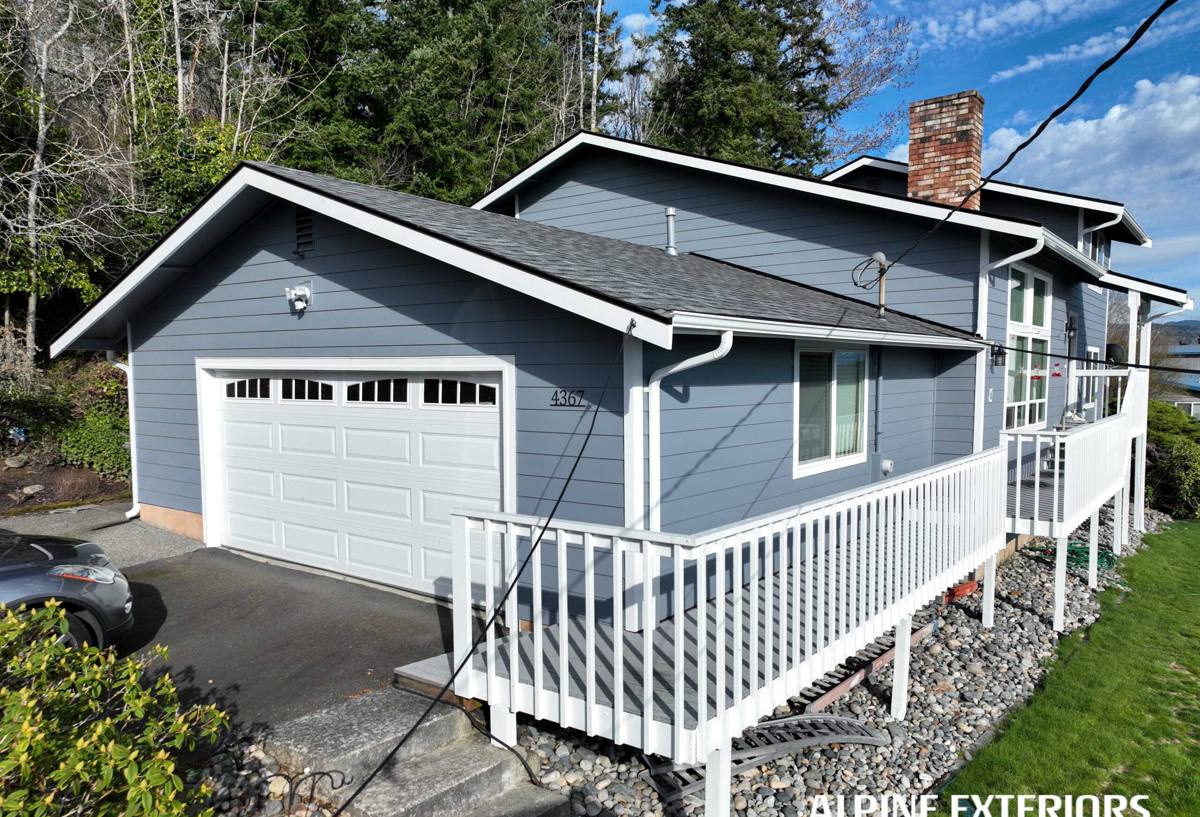
What Salt Air, Rain, and Moss Actually Do to a Roof
It helps to understand the mechanisms at work, because they drive almost every decision a good installer makes on your roof.
Salt air and corrosion
Airborne salt accelerates corrosion on any exposed metal — fasteners, flashing, vent caps, drip edge. Standard electro-galvanized fasteners can start showing rust streaks within a few years this close to the water. That streaking isn't just cosmetic; once a fastener starts to corrode, it loses holding power exactly where wind uplift is most likely to test it.
Driving rain and wind-driven water
Rain that comes in sideways, rather than straight down, finds every weak seam in a roof system. It pushes up under shingle tabs, works into nail penetrations, and exploits any flashing detail that was installed "close enough" instead of correctly. Most leaks we're called out to trace back to flashing — around chimneys, skylights, valleys, and wall-to-roof transitions — not to the field shingles themselves.
Moss and moisture retention
A long moss season means more months where a roof surface stays damp instead of drying out between rain events. Moss holds moisture against the roofing material, works its rhizoids under shingle edges, and lifts tabs just enough to let wind-driven rain in behind them. On a roof with poor airflow, that trapped moisture also feeds rot in the decking underneath, which you won't see until the damage is already done.
What a Correct New Roof Installation Involves
A new roof installation isn't just laying new material over the old. Done right, it's a sequence where each step protects the one above it.
- Full tear-off: old roofing removed down to the deck so it can actually be inspected, not just covered up.
- Deck inspection and repair: soft, delaminated, or rotted sheathing replaced before anything new goes down.
- Ice-and-water or synthetic underlayment at eaves, valleys, and penetrations — the layer that protects you if wind-driven rain ever gets past the field material.
- Corrosion-resistant fasteners and flashing suited to a marine-influenced climate, not standard-grade hardware.
- Detailed flashing work at every chimney, skylight, valley, and sidewall — the highest-leak-risk areas on any roof.
- Balanced attic ventilation so moisture has somewhere to go instead of condensing under the deck.
- Final inspection of nailing patterns, flashing laps, and ventilation before the job is called done.
Skip any one of these steps and the roof may still look fine from the ground for a year or two. The problems that skipped steps cause tend to show up as hidden rot or a leak in a hard-to-trace spot — the expensive kind of problem, not the obvious kind.
Choosing the Right Material for a Grandview Roof
There's no single "best" roofing material — every option is a set of trade-offs. What matters is matching the material to this specific climate and being honest about the maintenance each one asks of you.
| Material | How it handles salt air and rain | Moss resistance | Trade-offs to know |
|---|---|---|---|
| Architectural asphalt shingle | Good, with corrosion-resistant fasteners and flashing | Moderate — benefits from periodic cleaning | Most economical upfront; typical 25-30 year lifespan in this climate with proper ventilation |
| Standing seam metal | Excellent when fasteners/flashing are marine-grade | High — sheds moisture quickly, little surface for moss to grip | Higher upfront cost; installation quality matters even more due to fewer, larger panels |
| Synthetic/composite shingle | Good; doesn't absorb moisture like wood | Moderate to high depending on product | Mid-range cost; product-specific warranty terms vary widely |
| Cedar shake | Requires diligent maintenance in wet, mossy climates | Low without regular treatment and cleaning | We're honest with clients that the upkeep burden is real here — it's a beautiful look that asks for ongoing attention |
We'll walk you through this table in person, against your actual roof, budget, and how much maintenance you realistically want to take on. There's no wrong answer — just an informed one.
Our Installation Process
- On-site assessment: we look at your current roof, attic ventilation, and any trouble spots before quoting anything.
- Written estimate: material options, scope, and a clear price — no vague allowances.
- Scheduling around weather windows: we plan tear-off and dry-in around Whatcom County's rain patterns so your home isn't left exposed.
- Tear-off and deck inspection: old material removed, deck checked and repaired as needed.
- Underlayment and flashing installation: the protective layers that do the real work during storms.
- Roofing material installation: installed to manufacturer spec and to the extra detailing this climate calls for.
- Ventilation check: intake and exhaust balanced so the attic can dry out between wet spells.
- Final walkthrough: we show you the finished work and explain anything you should keep an eye on.
Ventilation and Moisture Control Aren't Optional Here
In a marine climate like Blaine's, attic ventilation is one of the most under-discussed parts of a roofing job — and one of the most consequential. Warm, moist air from inside the house rises into the attic. Without balanced intake and exhaust venting, that moisture condenses on the underside of the roof deck, especially during the cool, damp stretches that make up most of the year here. Over time, that's how you get sheathing rot from underneath, even on a roof with perfectly good shingles on top. Any new roof installation on a Grandview home should include a real look at attic airflow, not just a new layer on the outside.
Signs Your Roof Is Telling You It's Time
Most roofs don't fail all at once — they give warning signs first. Worth checking for:
- Shingle granules collecting in gutters or at downspout outlets
- Curling, cupping, or cracked shingle tabs
- Moss or dark streaking building up faster than it used to
- Soft spots or slight sagging when walking the roof (or visible from the ground)
- Daylight visible through the attic roof deck
- Rusting fasteners, flashing, or vent caps
- Leaks or water stains on interior ceilings, especially near chimneys or valleys
- A roof approaching or past 20-25 years old, regardless of visible damage
Any one of these on its own isn't necessarily an emergency, but a few together usually means it's time for a real assessment rather than another patch repair.
Why a Crew That Already Works Grandview Matters
Roofing crews who work this area regularly already know which flashing details tend to fail first on homes exposed to wind off the water, which fastener grades hold up and which don't, and how long moss season really runs here versus what a generic install schedule assumes. That's not a marketing point — it changes real decisions on your roof, like where extra underlayment goes, how ventilation gets balanced, and what fastener and flashing hardware actually holds up instead of failing early. A crew unfamiliar with this specific stretch of Whatcom County coastline is starting from a generic playbook. A crew that already works Grandview is starting from what actually happens to roofs here.
What to Expect From an Honest Estimate
A good roofing estimate should tell you exactly what's being torn off, what the deck inspection will look for, what underlayment and flashing materials are being used, how ventilation will be handled, and what the warranty actually covers — manufacturer material warranty versus our workmanship warranty are two different things, and you should know both before you sign anything. If an estimate skips over these details, that's worth asking about before you skip over it too.
If your roof is showing its age, or you just want a second, honest opinion on whether repair or replacement makes more sense for your specific situation, we're happy to come take a look. The estimate is free, there's no pressure, and you'll walk away with a clear picture of your options — use the form below to get started.