 Blaine Siding
 Deck Replacement in Lynden: Built for the Weather That's Actually Here
Lynden sits far enough inland from Blaine's shoreline that homeowners sometimes assume salt air and marine moisture aren't their problem. They are. Whatcom County's weather system doesn't stop at city limits — the same wet Pacific air mass, the same driving fall and winter rain, and the same long stretch of low sun and shade that fuels moss growth affects decks across the whole county, Lynden included. If your deck has gone soft in spots, grown a permanent green film, or just doesn't feel as solid as it did ten years ago, the cause is almost always weather exposure that's been working on it every single season, whether or not you noticed.
A deck replacement isn't just swapping old boards for new ones. Done right, it's a chance to fix the structural and drainage problems that caused the original deck to fail in the first place — so the replacement actually outlasts it.
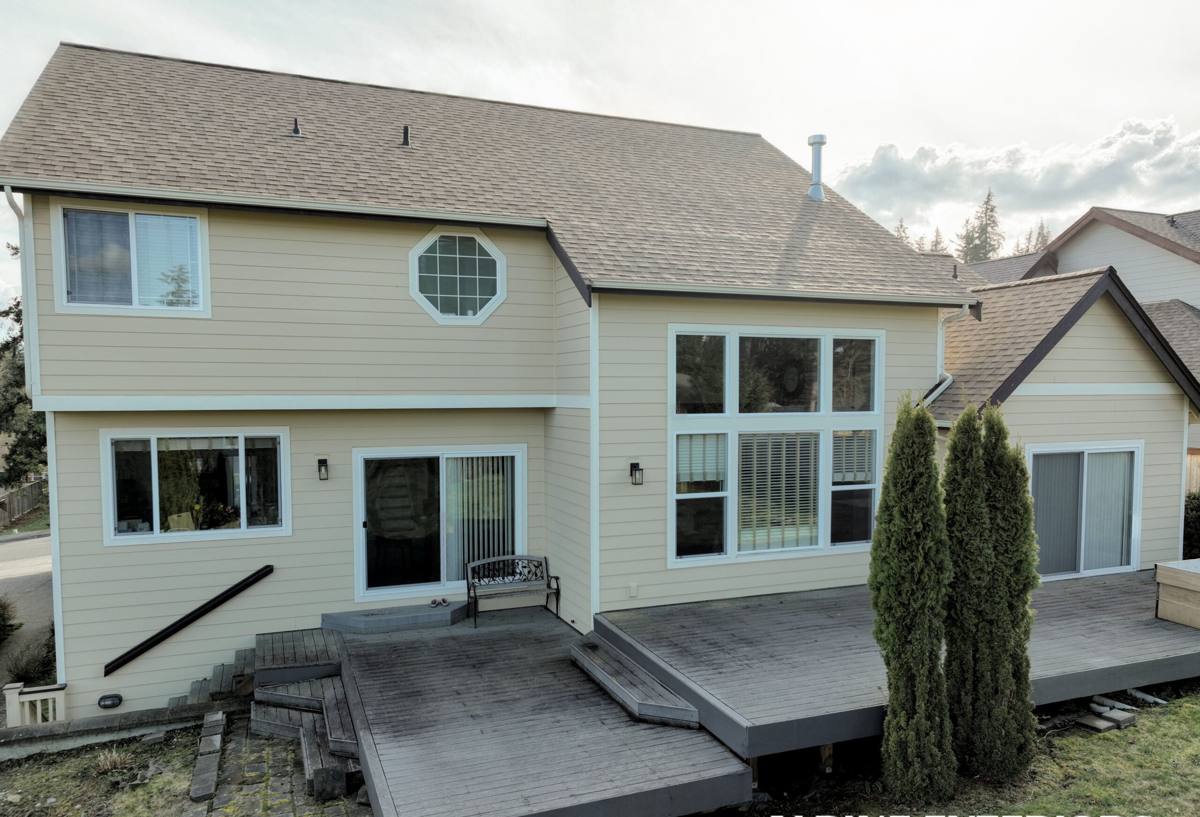
Why Lynden Decks Wear Out Faster Than People Expect
Whatcom County gets a long, wet fall-through-spring stretch, and Lynden's mix of open farmland and tree-lined residential lots means decks here deal with a combination of moisture problems most other regions only get one of at a time.
Moss and algae season
Any deck surface that stays shaded or damp for weeks at a time — under trees, on the north side of a house, or beneath a roofline that channels runoff onto the deck — will grow moss and algae. Beyond looking bad, that green film holds moisture against the wood surface long after the rest of the deck has dried, which is exactly the condition that leads to rot underneath.
Driving rain and end-grain saturation
Wind-driven rain in this region doesn't just fall straight down — it gets pushed sideways into railings, fascia boards, and the cut ends of deck boards. Cut ends soak up water far faster than a flat board face, which is why the first visible rot on most decks shows up at board ends and rail posts before anywhere else.
Freeze-thaw cycling
Whatcom County winters aren't brutally cold, but they do dip below freezing often enough that water trapped in wood fibers or in hairline cracks freezes, expands, and widens the damage. Over several seasons, this turns small surface checks into structural weak points.
What "Correct" Actually Means for a Deck Replacement
A lot of deck problems in this climate trace back to how the original deck was built, not just the age of the materials. A proper replacement addresses the structure, not just the surface.
Ledger board and house connection
Where the deck attaches to the house is the single most important — and most commonly mishandled — connection on the whole structure. It needs proper flashing that sheds water away from the house framing, not just a ledger board bolted on and caulked. Caulk fails; flashing that's installed correctly doesn't rely on caulk to do the work.
Footings and post bases
Wood posts sitting directly on or in contact with concrete or soil wick moisture up into the post over time. Posts need to be isolated from standing water and direct concrete contact, with footings sized and set below frost depth for this area.
Joist spacing and drainage
Joist spacing affects board deflection over time, and it needs to match the decking material — composite and wood have different span requirements. Just as important is making sure the substructure doesn't trap water underneath the deck where it can't evaporate or drain away.
Fastening
Hidden fastener systems look cleaner and avoid the small pockets around screw heads where water and debris collect, but they need to be rated for the specific decking product — mixing systems is a common source of squeaks and loosening over a few seasons.
Choosing Between Wood and Composite for This Climate
Both materials can perform well here if they're installed correctly and maintained on schedule. The honest trade-offs come down to how much upkeep you're willing to commit to versus the up-front cost.
| Factor | Wood (cedar/treated) | Composite |
|---|---|---|
| Moss resistance | Needs annual cleaning and sealing to resist moss and algae staining | Resists moss better but still needs periodic washing in shaded, damp areas |
| Upfront cost | Lower material cost | Higher material cost |
| Long-term maintenance | Sealing/staining every 1-2 years to prevent moisture intake | Occasional cleaning; no sealing required |
| End-grain vulnerability | Higher — cut ends need sealing at install and touch-up over time | Lower — most composite boards resist end-grain saturation better than wood |
| Appearance over time | Natural look, but grays and weathers without upkeep | Consistent color and texture over the life of the deck |
| Repair/replacement of individual boards | Straightforward and inexpensive | Straightforward, but matching color as products age can be harder |
Neither option is wrong. We'll walk through your specific deck's sun exposure, shading, and how much maintenance you actually want to do, and give you a straight recommendation instead of a sales pitch for whichever material has a bigger margin.
How We Approach a Deck Replacement
Every deck replacement we do in Lynden follows the same core sequence, adjusted for the specific layout and condition of your existing structure.
- Assessment: We check the ledger connection, posts, footings, and joists for rot or movement before quoting anything — this tells us whether it's a full tear-off or if part of the substructure can be reused safely.
- Tear-off and disposal: Old decking, railings, and any compromised framing come out completely, with debris hauled off the site.
- Structural correction: Ledger flashing, post isolation, footing depth, and joist spacing get brought up to a standard that accounts for this region's rain and freeze-thaw pattern — not just replaced like-for-like if the original had a flaw.
- Decking and railing install: Material goes down per manufacturer spec for fastening and gapping, with attention to drainage slope so water sheds instead of pooling.
- Final walkthrough: We check railings for solidness, confirm drainage is working as intended, and go over any maintenance the material requires.
Signs your deck needs replacement, not just repair
- Soft or spongy spots when you walk across the boards
- Visible rot or dark staining at board ends, rail posts, or the ledger connection to the house
- Railings that wobble or flex when leaned on
- Persistent moss or algae that returns within weeks of cleaning
- Gaps or movement where the deck meets the house siding or foundation
- Fasteners that are rusted, popped up, or pulling through the wood
Why Local Experience in Lynden Matters
A deck that's engineered correctly for a dry-climate region can still fail here if it's built to those same specs. Crews that work Whatcom County regularly know which details actually matter locally: flashing details that account for driving rain, footing depth for our freeze-thaw pattern, and fastening choices that hold up through a long wet season rather than a short one. That's the difference between a deck that needs attention again in five years and one that doesn't.
We also know this area well enough to give you a realistic maintenance expectation up front — not a rosy sales pitch — so you know what you're actually signing up for with whichever material you choose.
What Affects the Cost of a Deck Replacement
| Cost Factor | Why It Matters |
|---|---|
| Deck size and shape | More square footage and complex shapes (multi-level, angled sections) mean more material and labor |
| Material choice | Wood costs less upfront; composite costs more but reduces long-term maintenance spending |
| Substructure condition | If footings, posts, or framing need replacement (not just the decking surface), cost increases |
| Railing style | Cable, glass, or composite railing systems cost more than standard wood or metal baluster designs |
| Height and access | Elevated decks or decks with limited access for equipment and material staging add labor time |
| Permitting | Structural work typically requires permitting, which adds a small cost and timeline factor |
Rather than quote a number that doesn't reflect your specific deck, we walk the site, look at what's actually there, and give you a real range based on what the job requires.
Get a Straight Answer About Your Deck
If you're not sure whether your deck needs a full replacement or just targeted repairs, we're glad to take a look and tell you honestly which one it is. Fill out the form below for a free, no-pressure estimate — we'll assess the structure, talk through material options that make sense for a Lynden property, and give you a clear picture of the work and cost involved.