 Blaine Siding
 Why Sandy Point Roofs Wear Differently Than Inland Homes
Sandy Point sits right up against the water, and that changes what a roof has to deal with year after year. Homes just a few miles inland in Blaine or elsewhere in Whatcom County face a milder version of the same weather. Out here, the combination of salt-laden air, wind-driven rain coming off the water, and a long, damp moss season puts extra stress on every layer of a roof system — not just the shingles you can see, but the flashing, fasteners, and ventilation underneath.
Salt air is corrosive. It accelerates rust on exposed metal fasteners, flashing, and vent caps, and it can degrade lower-quality sealants faster than a manufacturer's warranty timeline assumes. Wind-driven rain doesn't fall straight down — it gets pushed sideways and upward under shingle edges and around penetrations, which means laps, flashing details, and underlayment choices matter more here than they would on a sheltered inland lot. And Whatcom County's wet, mild winters give moss and moisss-friendly algae months to establish themselves on any roof that doesn't shed water and dry out quickly.
None of this means a roof in Sandy Point can't last as long as one anywhere else. It means the installation has to account for these conditions from the start, rather than treating this as a standard residential roof job with a nicer view.
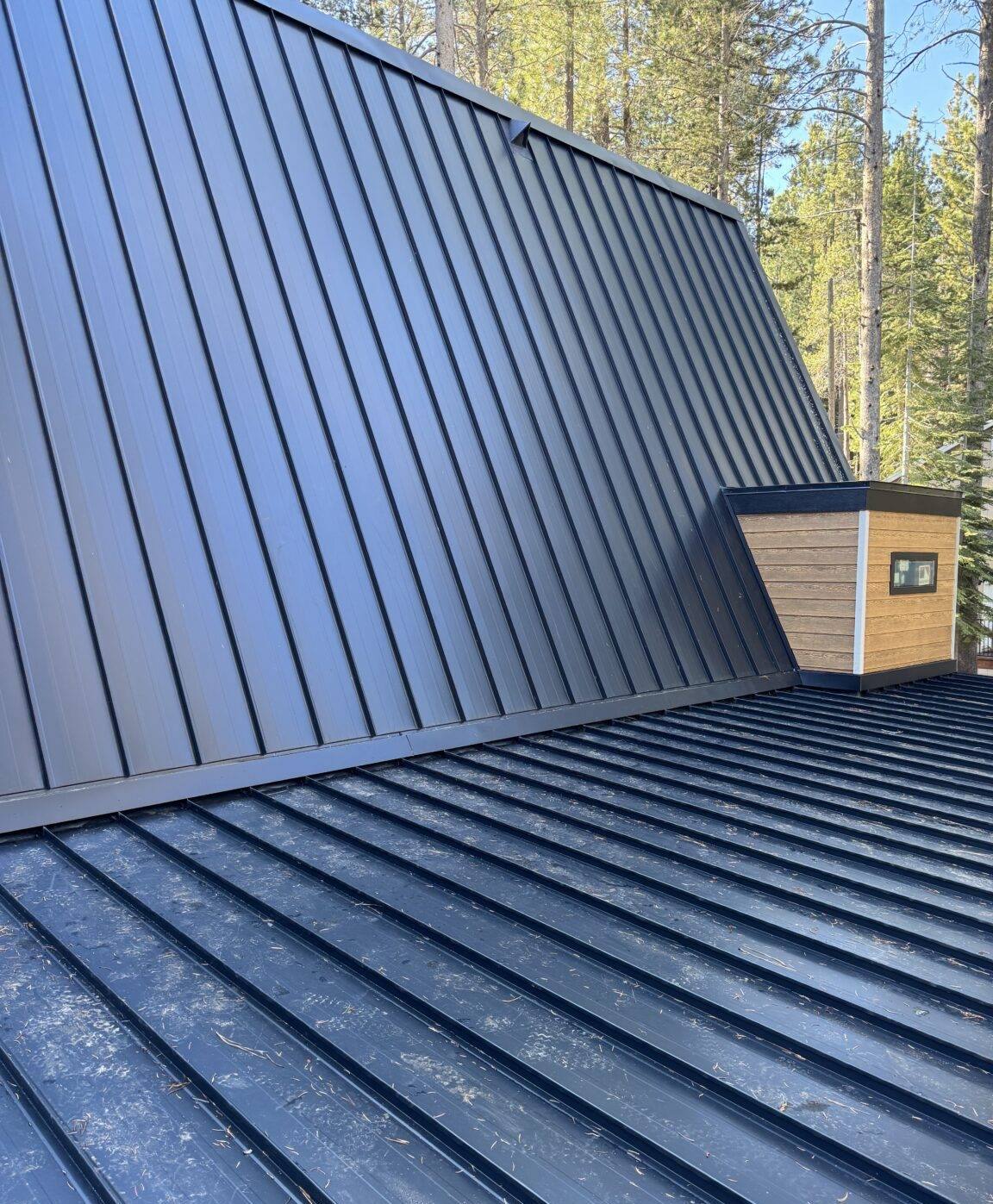
What a Correct New Roof Installation Actually Involves
A new roof is more than laying down shingles. Done right, it's a system, and every layer has a job to do:
Tear-Off and Deck Inspection
We remove the old roofing down to the deck rather than layering over it. This lets us actually see the plywood or OSB sheathing underneath. In a coastal, high-moisture environment like Sandy Point, it's common to find soft or delaminated decking around old flashing points, vents, or valleys where water has been finding its way in slowly for years. That damaged decking gets replaced — installing new shingles over a compromised deck just hides a problem instead of fixing it.
Underlayment
The underlayment is your backup water barrier if wind or ice ever gets under the shingles. In wind-driven rain conditions, a synthetic underlayment with strong lap adhesion, combined with self-adhering membrane at eaves, valleys, and any low-slope transitions, gives the roof a real second line of defense instead of just a formality.
Flashing
Flashing around chimneys, skylights, vents, and wall intersections is where most roof leaks actually start — not in the open field of shingles. Every flashing detail gets rebuilt with new material, properly lapped so water always moves downhill and outward, never trapped behind a seam.
Ventilation
Balanced intake and exhaust ventilation keeps the attic dry and temperature-stable. This matters twice as much here: it reduces the moisture buildup that feeds moss and mildew, and it protects the shingles and decking from the inside out.
Final Details
Ridge caps, drip edge, and fastening patterns get finished to the manufacturer's actual specification — not just "close enough" — because that's what keeps the warranty valid if you ever need it.
Choosing the Right Roofing Material for a Sandy Point Home
There's no single "best" roofing material for every house — it depends on your home's exposure, your roof's slope and complexity, and how you weigh upfront cost against long-term maintenance. Here's how the common options stack up specifically against salt air, wind-driven rain, and moss:
| Material | Salt Air / Coastal Durability | Moss Resistance | Typical Lifespan | Maintenance Burden |
|---|---|---|---|---|
| Architectural asphalt shingle | Good with corrosion-resistant fasteners and flashing | Moderate — benefits from algae-resistant granules | 25–30 years | Low to moderate |
| Standing seam metal | Very good, if fasteners and flashing are marine-grade | Excellent — sheds water fast, little to grip | 40–50+ years | Low |
| Composite / synthetic shake | Good, does not rot or absorb moisture like wood | Good | 30–40 years | Low |
| Cedar shake | Requires diligent maintenance in coastal humidity | Poor without regular treatment | 20–30 years with upkeep | High |
We don't push one material on every homeowner. What we do push is honesty about trade-offs: cedar shake can look great, but in a damp, salt-air environment it needs consistent cleaning and treatment to avoid moss and rot taking hold early — that's a maintenance commitment, not a flaw in the product itself. Metal and quality architectural shingles ask less of you over time, which is often the better fit for a property that isn't lived in year-round or where low upkeep matters most.
Fasteners, Flashing Metal, and the Details Salt Air Punishes First
The small hardware is where coastal roofs fail early if it's cut corners. Standard electro-galvanized fasteners and flashing can start showing rust streaks and weakening within just a few years this close to salt water. We spec corrosion-resistant fasteners and flashing metals rated for coastal exposure, and we pay attention to avoiding direct contact between dissimilar metals, which can accelerate corrosion through galvanic reaction. It's a detail that costs a little more upfront and prevents a callback five years down the road.
Moss Season: Prevention Built Into the Install
Moss doesn't need much to get started — shade, moisture, and a surface that holds both. A well-installed roof fights moss passively, before you ever need to scrub or treat anything:
- Proper slope and clean water flow so shingles dry out between rain events instead of staying damp
- Algae-resistant shingle granules on asphalt roofs, which reduce the dark streaking and organic growth common in wet climates
- Tight, correctly lapped flashing so water doesn't pool at transitions
- Balanced attic ventilation so moisture isn't pushed up into the roof deck from below
- Trim recommendations for overhanging branches where we see shade contributing to moss-prone areas
A roof installed with these details in mind will still eventually need occasional gentle cleaning in a Whatcom County climate — no roof is maintenance-free here — but it won't be fighting an uphill battle against moss from day one.
Our Installation Process, Start to Finish
- On-site inspection and estimate — we look at your current roof, attic ventilation, and any trouble spots before quoting anything.
- Material selection — we walk through the honest trade-offs for your specific home and exposure, not a one-size-fits-all pitch.
- Scheduling around weather — we plan install windows with an eye on forecasted wind and rain, since a roof mid-tear-off needs a dry stretch to close in properly.
- Tear-off and deck inspection — old roofing removed, decking checked and repaired as needed.
- Underlayment, flashing, and ventilation installed — the parts you won't see again but that determine how the roof performs for the next 25+ years.
- Roofing material installed to manufacturer spec — correct nailing patterns, exposure, and lap for wind and rain resistance.
- Site cleanup and magnetic sweep — nails and debris cleared from the yard and driveway.
- Final walkthrough — we go over the finished roof with you before calling the job done.
Why a Crew That Already Works Sandy Point Is Worth It
Roofing crews that mostly work drier, more sheltered neighborhoods sometimes treat coastal jobs as a standard install with an upcharge for travel. That's backwards. A crew that regularly works Sandy Point and the surrounding Blaine waterfront knows to spec corrosion-resistant hardware by default, knows which flashing details tend to take the most abuse from wind-driven rain, and knows how to sequence a job around the area's weather windows so the deck isn't left exposed during an exposed-coast storm. That familiarity shows up later as fewer callbacks and a roof that actually performs the way it was designed to, not just the way it looked on installation day.
It also matters for permitting and code compliance — Whatcom County has its own permitting process for reroofing, and a local crew that pulls permits here regularly knows the process rather than learning it on your project.
What This Costs, Honestly
Every roof is priced on its own specifics — size, pitch, number of penetrations, current deck condition, and material choice all move the number. Rather than quote a misleading flat rate, we'll walk your roof and give you a real number in writing. In general, expect coastal-grade fasteners, algae-resistant shingles, and reinforced flashing to add modestly to material cost compared to a bare-minimum install — money that's well spent given what this location does to a corner-cutting roof.
If you're weighing a new roof for a Sandy Point home, we're happy to take a look and give you a straightforward, no-pressure estimate — no exaggerated urgency, just an honest read on your roof's condition and what it actually needs. The form below gets you started.