 Blaine Siding
 Decks in Point Roberts Face a Tougher Climate Than Most Homeowners Realize
Point Roberts sits on a small peninsula at the edge of Whatcom County, surrounded on three sides by water. That location gives homeowners some of the best views in the region, but it also means decks here take a beating that inland decks in Blaine or elsewhere in the county simply don't experience to the same degree. Salt-laden air moves in off the water and settles into every joint, fastener, and exposed grain line. Driving rain off the Strait doesn't just fall on a deck — it drives sideways into ledger connections, under flashing, and into end grain that isn't sealed. And the long, wet moss season common to Western Washington runs even longer here, with shaded, north-facing, and low-airflow decks staying damp for weeks at a stretch.
None of that means a deck in Point Roberts is doomed to fail early. It means the repair has to account for what's actually attacking the structure, not just patch over the symptom. A board that looks soft on top might be fine underneath, or it might be hiding a ledger board connection that's been wicking moisture for years. Getting that distinction right is the difference between a repair that lasts and one you're paying for again in two seasons.
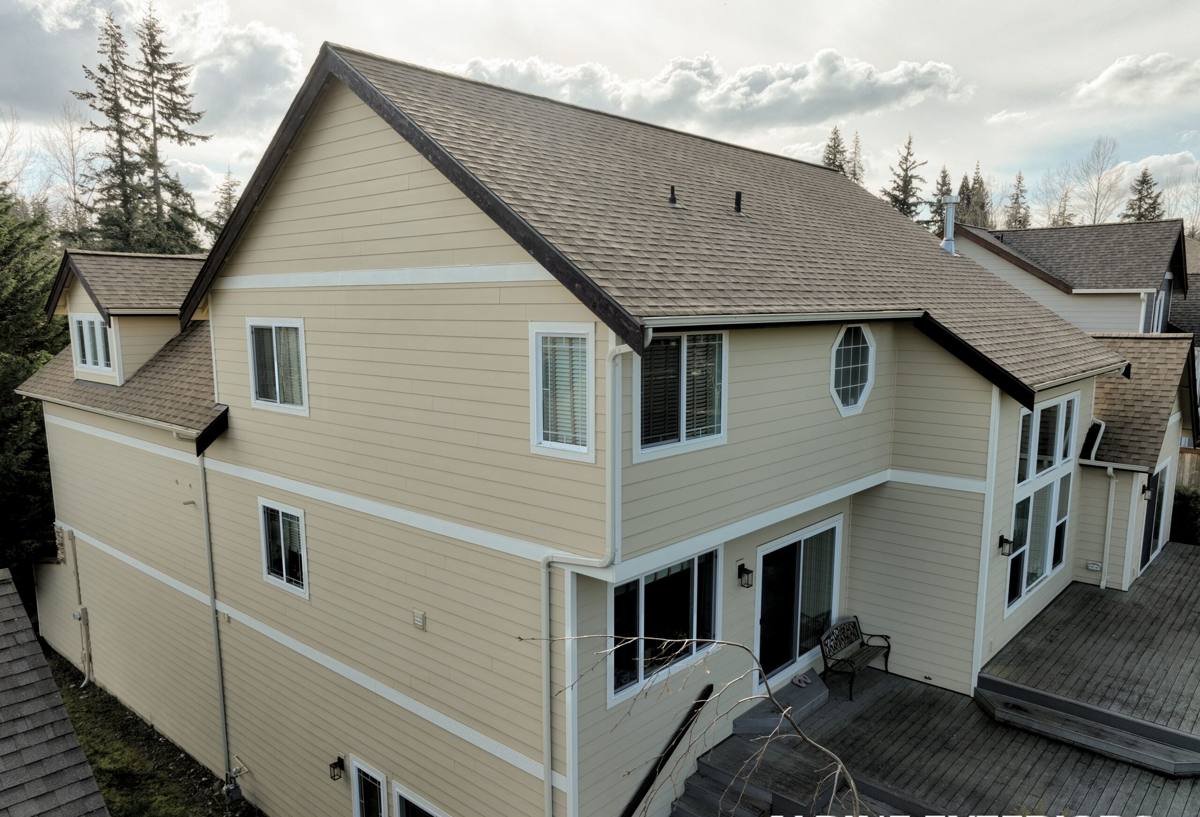
What Salt Air, Rain, and Moss Actually Do to a Deck
Salt Air and Corrosion
Airborne salt accelerates corrosion in any fastener, bracket, or connector that isn't rated for coastal exposure. Standard galvanized nails and screws can start rusting from the inside of a joint long before any surface rust is visible. Once a fastener weakens, the board around it loosens, water intrudes at that new gap, and the cycle speeds up.
Driving Rain and Water Intrusion
Wind-driven rain finds paths that vertical rain never would — up under railing caps, behind fascia boards, and into the seam where a ledger board meets the house. Left alone, this is one of the most common causes of hidden rot, because the visible deck surface can look completely normal while the framing behind it is compromised.
Moss, Algae, and Trapped Moisture
A long moss season means more weeks per year where a deck surface stays damp instead of drying out between rains. Moss and algae hold moisture against the wood or composite surface, and on wood decking that moisture cycle is what eventually breaks down fibers and invites rot. On composite decking, buildup mostly affects appearance and slip resistance, but it's still worth addressing before it stains permanently.
Signs a Point Roberts Deck Needs Repair
- Soft, spongy, or spring-loaded feeling when you walk across certain boards
- Visible gaps or movement where the deck ledger meets the house
- Rust streaks running down from screw or bolt heads
- Railings or posts that flex more than they used to
- Persistent green or black staining that returns quickly after cleaning
- Gaps opening up between decking boards beyond normal seasonal movement
- Stair stringers or landing posts that feel less solid underfoot
- Discoloration or swelling at board ends, where end grain absorbs the most water
Any one of these on its own might be minor. Several together, especially near the ledger or support posts, usually means it's time for a proper inspection rather than a surface-level fix.
What a Correct Deck Repair Actually Involves
A repair done right starts below the decking, not on top of it. That means checking the structural bones of the deck before touching a single board:
- Ledger board connection — the point where the deck attaches to the house is the single most important structural connection and the most common source of hidden water damage in this climate
- Support posts and footings — checked for rot at the base, movement in the ground, and proper contact with footings
- Joists and beams — inspected for soft spots, cracking, or corrosion at hanger connections
- Flashing — verified as present and intact where the deck meets the house siding, since this is the single biggest defense against wind-driven rain intrusion
- Fasteners and hardware — replaced with corrosion-resistant hardware where salt exposure has already started breaking down standard fasteners
- Decking and railings — repaired or replaced based on what's actually failed, not automatically swapped wholesale
Only after the structure is confirmed sound does it make sense to talk about replacing individual boards, refinishing a wood surface, or cleaning up a composite deck's appearance. Skipping straight to cosmetic repair on a deck with an underlying structural issue is how homeowners end up paying twice.
Repair or Replace? A Practical Comparison
| Factor | Repair Usually Makes Sense | Replacement Usually Makes Sense |
|---|---|---|
| Structural framing | Solid, with isolated soft spots | Widespread rot at joists, beams, or ledger |
| Decking condition | Scattered bad boards, rest is sound | Most boards show rot, cupping, or fastener failure |
| Age of deck | Under 15-20 years, built to code | Older deck, unclear or outdated construction |
| Ledger connection | Intact, properly flashed | Compromised, poorly flashed, or missing flashing |
| Cost outlook | Lower upfront cost, targeted fix | Higher upfront cost, resets the clock on the whole deck |
These are general guidelines, not hard rules — the right call always depends on what we actually find once boards come up and connections are exposed. We'll walk you through what we see and why we're recommending one path over the other.
Wood vs. Composite: What We Consider During Repair
Point Roberts has plenty of both wood and composite decks, and each comes with its own maintenance reality in this climate. Wood decking, when properly maintained with regular sealing and prompt repair of damaged boards, can perform well, but it demands more ongoing attention in a marine environment with a long wet season. Composite decking generally needs less routine maintenance and resists rot in the decking boards themselves, but the substructure underneath — the framing, ledger, and fasteners — still needs the same careful attention regardless of what's on top. A composite deck built on a neglected or poorly flashed frame will fail at the structure even if the surface boards look brand new.
We repair both types and won't push you toward a full material swap unless the existing structure genuinely calls for it. Our standard is matching the repair approach to what the deck actually needs, not to whichever material is easiest for us to install.
Our Repair Process
- On-site inspection — we check the ledger, framing, posts, footings, and decking surface, including areas that aren't visible without pulling a few boards
- Honest assessment — we tell you what's failing, what's still sound, and what our repair recommendation is based on, in plain terms
- Written scope — you get a clear breakdown of what work is included before anything starts
- Repair work — structural issues addressed first, followed by decking, railings, and hardware
- Final check — we confirm the repaired areas are solid, properly fastened, and flashed correctly before we consider the job done
Why Local Access Matters for Scheduling
Point Roberts is separated from the rest of Whatcom County by land, with road access running through Canada. That geography is worth factoring into how deck repair projects get scheduled — material deliveries, crew travel time, and timing around border crossings all take a bit more planning than a job across town in Blaine. A crew that already works in Point Roberts regularly has that logistics piece figured out, which means fewer delays and a more predictable timeline for your repair. It's a small detail, but it's one that catches homeowners off guard when they bring in a contractor who's never worked out this way before.
Maintaining a Repaired Deck in This Climate
- Clean moss and algae off the surface at least once during the wet season, not just once a year
- Check the ledger area and any visible flashing after major storms
- Reseal or refinish wood decking on the manufacturer's recommended schedule, not just when it looks faded
- Keep gutters and downspouts near the deck clear so runoff isn't draining directly onto or under it
- Watch for early rust on fasteners and address it before it spreads to the surrounding wood
- Trim back vegetation that's shading the deck and slowing how quickly it dries out
A repair is only as good as the maintenance that follows it. Decks in this climate that get a little seasonal attention consistently outlast ones that only get looked at when something's obviously wrong.
If your deck in Point Roberts has soft spots, rust stains, persistent moss, or just feels less solid than it used to, we're happy to take a look and give you a straight answer on what it needs. Estimates are free, there's no pressure to book anything on the spot, and you can use the form below to get in touch.