 Blaine Siding
 Roofing in a Salt Air, High-Moisture Corner of Whatcom County
Dakota Creek homes sit in one of the more demanding roofing environments in Blaine. This part of Whatcom County catches marine air off the nearby saltwater, driving rain that comes in sideways more often than straight down, and enough shade and moisture through the fall and winter to keep moss actively growing for months at a stretch. None of that is a defect in any particular roof — it's just the climate. But it does mean a roof replacement here needs to be planned differently than one going on a house fifty miles inland.
We work on homes throughout Dakota Creek and the surrounding Blaine area regularly, and the patterns repeat: roofs that look fine from the ground but are failing underneath from years of trapped moisture, valleys and low-slope sections that hold moss longer than the rest of the roof, and fasteners or flashing that corrode faster than the shingles around them. A correct replacement addresses all of that, not just the visible layer.
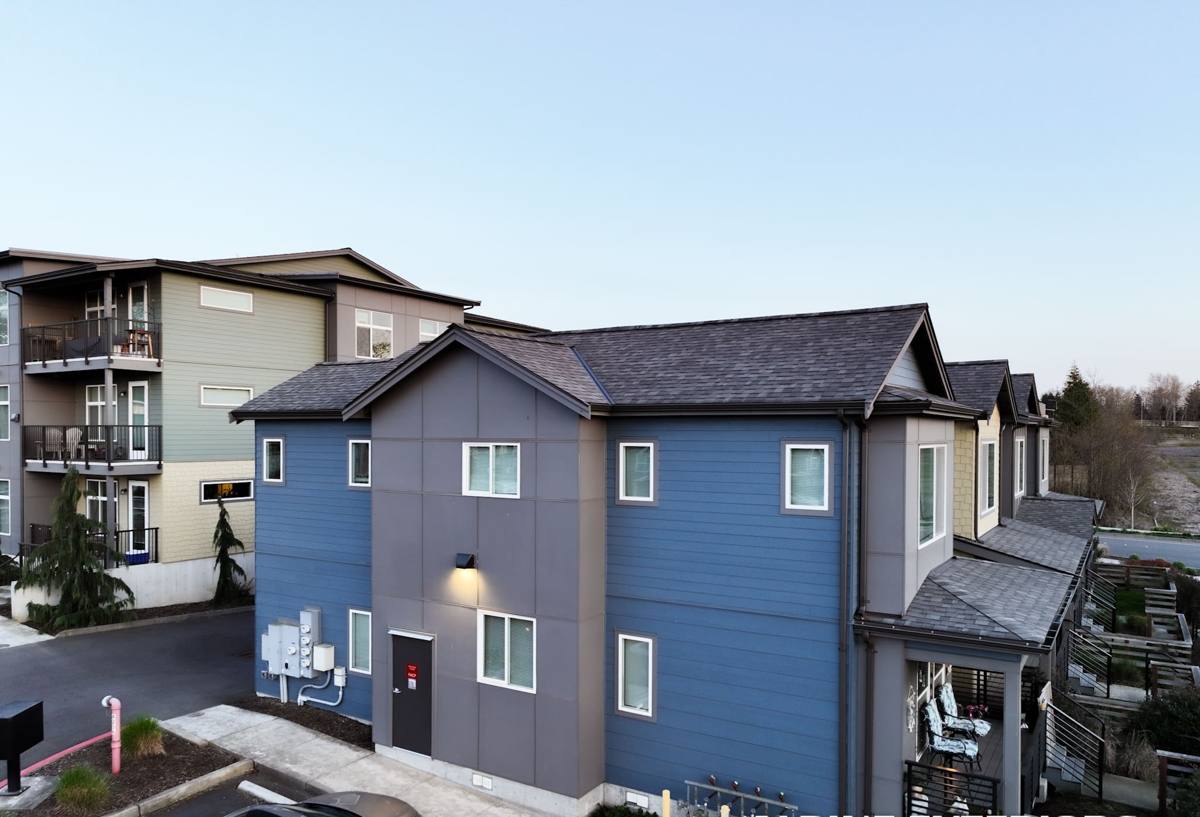
How Salt Air, Rain, and Moss Shorten Roof Life Here
Salt Air and Metal Fatigue
Homes closer to the water deal with airborne salt that settles on every exposed surface, including the roof. Over years, that accelerates corrosion on unprotected fasteners, flashing, and any exposed metal edge. It's not usually dramatic — it's slow pitting and rust streaking that eventually lets water find a way in around a nail head or a flashing seam.
Driving Rain and Wind-Driven Water
Blaine gets weather that pushes rain sideways under normal shingle laps, especially during winter storms coming off the Strait. A roof built for a calmer climate — with minimal underlayment or under-built flashing details — can hold up fine in a light rain and still leak in a wind-driven one. Roof replacements out here need to assume wind-driven rain is normal, not a rare event.
Moss, Shade, and Organic Growth
Between tree cover and the long stretch of wet months, moss has plenty of time to establish itself on north-facing slopes, valleys, and any section that stays shaded and damp. Moss holds moisture against the roofing material, works its way under shingle edges, and can lift tabs enough to let water underneath. On an aging roof, moss is often less a cosmetic issue and more an early sign of ongoing moisture damage.
Signs a Dakota Creek Roof Needs Replacement, Not Another Repair
Not every roof problem calls for a full tear-off. But there's a point where patching stops making financial sense and a full replacement becomes the more honest recommendation. Some of the signs we look for:
- Granule loss heavy enough to expose the shingle mat, especially on south- and west-facing slopes
- Moss growth that returns within a season or two of cleaning, even in the same spots
- Soft or spongy decking felt underfoot during an inspection, which usually means water has already reached the sheathing
- Multiple past repairs in different areas of the same roof rather than one isolated issue
- Shingles curling, cracking, or losing their seal in patches rather than uniformly with age
- Visible daylight or water staining in the attic near valleys, chimneys, or vent penetrations
If a roof is showing two or more of these at once, repair costs tend to catch up to replacement costs quickly — and a patched roof in this climate rarely buys as many years as homeowners hope.
What a Correct Roof Replacement Involves
Tear-Off and Deck Inspection
We remove the old roofing down to the deck rather than layering over it. That's the only way to actually see the condition of the sheathing, which matters a lot in a climate where trapped moisture can quietly rot decking for years under an intact-looking roof. Any soft or damaged sheathing gets replaced before anything new goes down — skipping this step is one of the most common shortcuts that leads to early failure.
Underlayment and Water-Resistant Barrier
Given how often wind drives rain up under shingle laps here, we use a synthetic underlayment across the whole roof and add self-adhering ice-and-water barrier at the vulnerable points — eaves, valleys, and around every penetration. This second layer of protection is what keeps a small wind-driven leak from becoming a decking problem.
Ventilation Balance
A roof needs balanced intake and exhaust ventilation to manage moisture from inside the house as well as outside. Poor ventilation traps humid air against the underside of the deck, which speeds up rot and gives moss and mold more to work with from below. We check the existing ventilation setup on every replacement rather than assuming it's adequate.
Flashing and Penetrations
Chimneys, skylights, vent stacks, and roof-to-wall transitions are where most leaks actually start, not in the open field of shingles. We replace flashing rather than reusing old pieces, and we pay particular attention to corrosion-resistant materials at these points given the salt air exposure.
Choosing Roofing Materials for Local Conditions
There isn't one universally "correct" material for Dakota Creek — the right choice depends on the home's slope, tree cover, budget, and how much ongoing maintenance a homeowner wants to do. Here's how the common options compare for this specific climate:
| Material | Upfront Cost | Moss & Algae Resistance | Salt-Air Durability | Ongoing Maintenance |
|---|---|---|---|---|
| Architectural Asphalt Shingle | Moderate | Good with algae-resistant granules | Good with corrosion-resistant fasteners | Periodic moss removal recommended |
| Standing Seam Metal | Higher | Very good — sheds moss more easily | Excellent with marine-grade coatings | Low; occasional debris clearing |
| Synthetic Shake | Higher | Good | Good | Low to moderate |
| Untreated Cedar Shake | Highest | Poor without regular treatment | Fair; fasteners need upgrading | High — regular treatment and moss control needed |
We don't push one product on every home. What we will say plainly: in a moss-heavy, salt-exposed environment, we steer homeowners away from untreated cedar unless they're committed to a real maintenance schedule, simply because the upkeep burden and moisture behavior make it a harder product to keep watertight long-term here. Architectural shingle remains the most common choice for good reason — it balances cost, performance, and warranty structure well for this climate when installed with the right underlayment and flashing details.
Our Process, Start to Finish
- Inspection and estimate. We walk the roof and attic, document the actual condition, and give you a written estimate with no pressure to decide on the spot.
- Material selection. We go over the options that make sense for your roof's slope, tree exposure, and budget, including trade-offs honestly.
- Scheduling around weather. We plan the tear-off for a stretch of workable weather so your home isn't exposed longer than necessary.
- Tear-off and deck repair. Full removal down to the sheathing, with any damaged decking replaced before moving forward.
- Underlayment, flashing, and installation. Ice-and-water barrier at vulnerable points, new flashing throughout, then the new roofing installed to manufacturer spec.
- Cleanup and walkthrough. Magnetic sweep for nails, hauling of debris, and a final walkthrough so you know exactly what was done.
Why a Crew That Already Works Dakota Creek Matters
Roofing in Blaine isn't identical to roofing thirty miles south, and it's worth working with a crew that already understands that. Local experience means knowing which slopes in this area tend to hold moss longest, which flashing details actually hold up against the wind-driven rain typical of winter storms here, and which fastener and material grades are worth the extra cost given the salt air. It also means faster response if a storm causes damage, and familiarity with Whatcom County permitting so the paperwork side doesn't slow the job down.
A crew unfamiliar with this stretch of coastline might build a roof that's technically sound in a generic sense but under-protected for what this specific location throws at it year after year. That gap usually doesn't show up until the second or third wet season.
Protecting Your New Roof: Moss and Debris Maintenance
A properly installed roof still benefits from basic upkeep in this climate. A short list that goes a long way:
- Clear gutters and valleys of needles and leaf debris at least twice a year, more often under heavy tree cover
- Have moss growth removed gently as soon as it appears rather than letting it establish
- Trim back overhanging branches to reduce shade and debris buildup on the roof surface
- Check attic ventilation isn't blocked by insulation or storage that's crept over vents
- Schedule a quick visual inspection after major windstorms to catch lifted flashing or shingles early
When to Schedule Your Replacement
Late spring through early fall gives the most predictable stretches of dry, workable weather for a tear-off in this area, which is why that window fills up early. That said, a roof that's actively leaking or showing decking damage shouldn't wait for ideal weather — we can often work around shorter dry windows even in the off-season when the situation calls for it. The right timing depends more on your roof's actual condition than the calendar.
If you're not sure whether your Dakota Creek home needs a repair or a full replacement, we're happy to take a look and give you a straight answer either way. Reach out for a free, no-pressure estimate using the form below.