 Blaine Siding
 Semiahmoo Sits Where Whatcom County's Weather Gets Serious
Semiahmoo occupies one of the most exposed pieces of ground in Whatcom County. The peninsula sits out in Semiahmoo Bay, with open water on multiple sides and almost nothing to slow the wind or the salt spray before it reaches a home's exterior walls. That combination — constant marine moisture, driving rain off the water, and long stretches of shade and dampness through fall and winter — is harder on siding than what most inland Blaine and Whatcom County homes deal with.
We're not describing a hypothetical. This is the same air, rain, and moss pressure our crew works around every week on homes up and down this stretch of coastline. It shapes which siding material we're willing to put our name behind, and it shapes exactly how we install it.
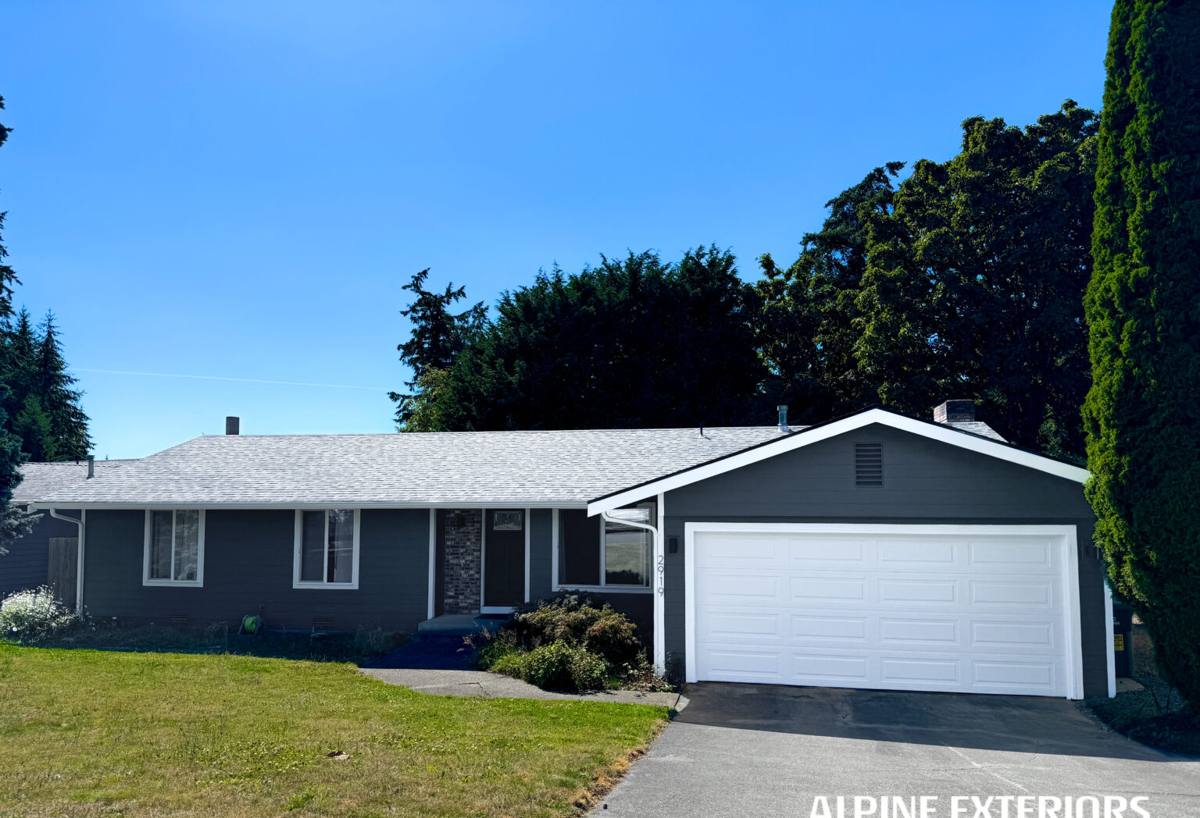
What Salt Air, Driving Rain, and a Long Moss Season Actually Do to a Wall
Salt Air
Airborne salt is corrosive to fasteners, flashing, and trim, and it's abrasive to painted or coated surfaces over time. On a waterfront peninsula like Semiahmoo, salt-laden moisture settles on siding daily, not just during storms. Materials and coatings that hold up fine forty minutes inland can chalk, fade, or corrode faster this close to the water.
Driving Rain
Wind off the bay doesn't just fall as rain — it drives rain sideways into wall assemblies, seams, and any gap in the water-management system. A siding job here lives or dies on the flashing, house wrap, and butt-joint detailing behind the visible surface, not on the siding material alone.
A Long Moss Season
Whatcom County's wet, mild fall-through-spring stretch is prime growing season for moss and algae, especially on north-facing or shaded walls that don't dry out between rain events. Moss holds moisture against a wall surface far longer than bare siding would, which accelerates rot in any material that isn't moisture-stable, and it stains porous or absorbent surfaces in ways that are difficult to fully reverse.
Put those three together — salt, wind-driven rain, and persistent moss pressure — and you get a climate that punishes any weak point in a siding system within a few years, not a few decades.
Why We Install James Hardie Fiber Cement Here — Nothing Else
We standardized on James Hardie for every home we side, and a property like this is exactly why. Fiber cement is dimensionally stable and moisture-resistant in a way that matters directly on this peninsula:
- It doesn't rot. Hardie board is cement-based, not wood-based, so the moisture that feeds rot in wood, engineered wood, or wood-fiber siding doesn't have the same material to work on.
- It's dimensionally stable in swings between soaked and dry. Homes here go from saturated to sun-dried and back constantly through the wet season. Materials that swell and shrink with moisture loosen fasteners and open seams over time; fiber cement moves far less.
- The factory finish is engineered for this kind of exposure. James Hardie's ColorPlus finish is baked on in a controlled factory environment and backed by its own finish warranty, which holds up better against salt-laden air and UV than field-applied paint typically does.
- It's non-combustible. Not a Semiahmoo-specific issue, but a real one across Whatcom County during dry summer stretches, and one more reason we don't compromise on the material.
James Hardie also builds region-specific product lines — HZ5 and HZ10 — engineered for different moisture and freeze exposure levels. For a waterfront property in this zone, we spec and install the HZ product line matched to Pacific Northwest coastal conditions, not a generic national default.
We don't install vinyl, LP SmartSide, Cemplank, Allura, primed spruce, or cedar. Each of those has legitimate uses somewhere, but on this peninsula the trade-offs — vinyl's tendency to warp and gap under sustained wind-driven rain and heat cycling, engineered wood's greater sensitivity to sustained moisture exposure, primed wood's dependence on perfect field-painting and maintenance — aren't trade-offs we're willing to put on a home that's going to take this much weather. Fiber cement, installed correctly, is the one system we've seen consistently earn its keep in this exact environment.
What "Installed Correctly" Actually Means on a Semiahmoo Home
James Hardie siding fails early almost exclusively because of installation mistakes, not because of the material itself. In a high-exposure environment like this, the margin for error is smaller. A correct installation includes:
- Proper weather-resistant barrier (house wrap) installed and lapped correctly before any siding goes up, so the wall behind the siding is protected even if wind-driven rain gets past the surface.
- Flashing at every window, door, deck ledger, and roof-to-wall transition — the exact points where driving rain finds its way in if flashing is missing or installed backwards.
- Correct fastener spacing, type, and depth. Hardie specifies fastener requirements precisely, and using the wrong nail pattern or gun pressure is one of the most common causes of siding that cracks or blows off in coastal wind.
- Proper clearance from grade, decks, patios, and roof lines — Hardie's minimum clearance guidelines exist specifically to keep splash-back moisture and standing water off the bottom edge of the board.
- Caulked and painted cut edges at every field cut, since factory ColorPlus coating only protects factory edges — an exposed raw cut edge is a moisture entry point waiting to happen.
- Correct joint and seam treatment so butt joints shed water instead of collecting it, particularly on walls facing prevailing wind and rain.
Skip any one of these on a normal inland job and you might get away with it for years. Skip one of these on a Semiahmoo waterfront wall and the salt air, rain, and moss will usually find it fast.
Our Process for a Semiahmoo Siding Project
- On-site assessment. We walk the exterior, check the existing wall assembly and any moisture or rot damage, and note wind exposure by elevation — the ocean-facing side of a Semiahmoo home almost always needs more attention than the leeward side.
- Tear-off and sheathing check. We remove old siding and inspect the sheathing underneath for hidden moisture damage before anything new goes on. This step matters more here than almost anywhere else in the county.
- Water-resistant barrier and flashing. House wrap and flashing go in first, sealed and lapped to shed water down and out, at every penetration.
- James Hardie installation to spec. Correct fastener schedule, clearances, seam treatment, and factory-finished ColorPlus board, installed per James Hardie's published requirements — not shortcuts.
- Trim, caulking, and final detail work. Every cut edge sealed and painted, every joint finished properly.
- Final walkthrough. We go over the finished exterior with you before calling the job done.
What Drives Cost on a Job Like This
| Factor | Why It Matters in Semiahmoo |
|---|---|
| Wall exposure by elevation | Water-facing walls often need extra flashing detail and sometimes a different product line than sheltered walls |
| Existing sheathing condition | Salt air and rain exposure over time can mean hidden repair work is needed before new siding goes on |
| Trim and detail complexity | Waterfront homes often have more windows, decks, and rooflines, each requiring its own flashing |
| Product line (HZ5 vs. standard) | Coastal-engineered Hardie lines cost more than standard interior-zone product, but they're built for this exposure |
| Access and site conditions | Waterfront lots can have limited staging space or steep grades affecting labor time |
We give a firm, itemized quote after the on-site assessment — not a phone estimate — because exposure and existing wall condition vary too much house to house on this peninsula to guess accurately.
Keeping James Hardie Siding Looking Right in This Climate
Fiber cement is low-maintenance compared to wood or vinyl, but "low-maintenance" isn't "no-maintenance" in a salt-air, high-moss environment. A simple homeowner checklist:
- Rinse siding annually, especially north- and shade-facing walls, to keep salt film and early moss growth from building up.
- Trim back vegetation and tree cover that keeps any wall section shaded and damp longer than the rest of the house.
- Walk the exterior once a year and check caulking at trim, windows, and joints for cracking or gaps — small caulk failures are cheap to fix early and expensive to ignore.
- Watch gutters and downspouts during the wet season; overflow running down a wall face accelerates staining and moss growth in exactly the spots it hits.
- Address any moss or algae growth promptly rather than letting it establish — the longer it sits, the more moisture it holds against the wall.
Why It Matters That We Already Work This Peninsula
A crew that's only worked drier, inland Whatcom County jobs can install James Hardie board correctly on paper and still miss what this specific environment demands — the extra flashing detail on a bay-facing wall, the clearance adjustments a waterfront lot needs, the product line that actually makes sense here versus a standard spec sheet default. We're a Blaine-based crew that already does this work on this peninsula. We know which walls take the worst of the weather before we even walk the site, and we build the installation around that from day one instead of learning it the hard way after the first winter storm season.
If you're planning a siding project on your Semiahmoo home, we'll walk the property, look at what your walls are actually dealing with, and give you a straight, no-pressure estimate for a correctly installed James Hardie system built for this exact stretch of coastline. Use the form below to get started.