 Blaine Siding
 Siding That Actually Holds Up in Sumas
Sumas sits in a corner of Whatcom County where the land does a lot of the talking. It's a low-lying valley community pressed up against the base of Sumas Mountain, ringed by farmland, drainage ditches, and tree cover that keeps things shaded and slow to dry out. Add in the marine-influenced air that pushes inland across this part of the county, long stretches of driving rain, and winters that can turn sharp when cold air funnels down from the east, and you've got a climate that is genuinely tough on exterior walls. Siding here isn't just a cosmetic choice — it's the first line of defense against moisture that has nowhere fast to go.
We install siding across the Blaine and Whatcom County area, and Sumas homes tend to show a particular pattern of wear: moss creeping up north-facing walls, paint failing early on shaded sections, and soft trim boards where water has been sitting against the house longer than it should. None of that is bad luck. It's what happens when a siding system isn't built for a wet, shaded, slow-drying valley.
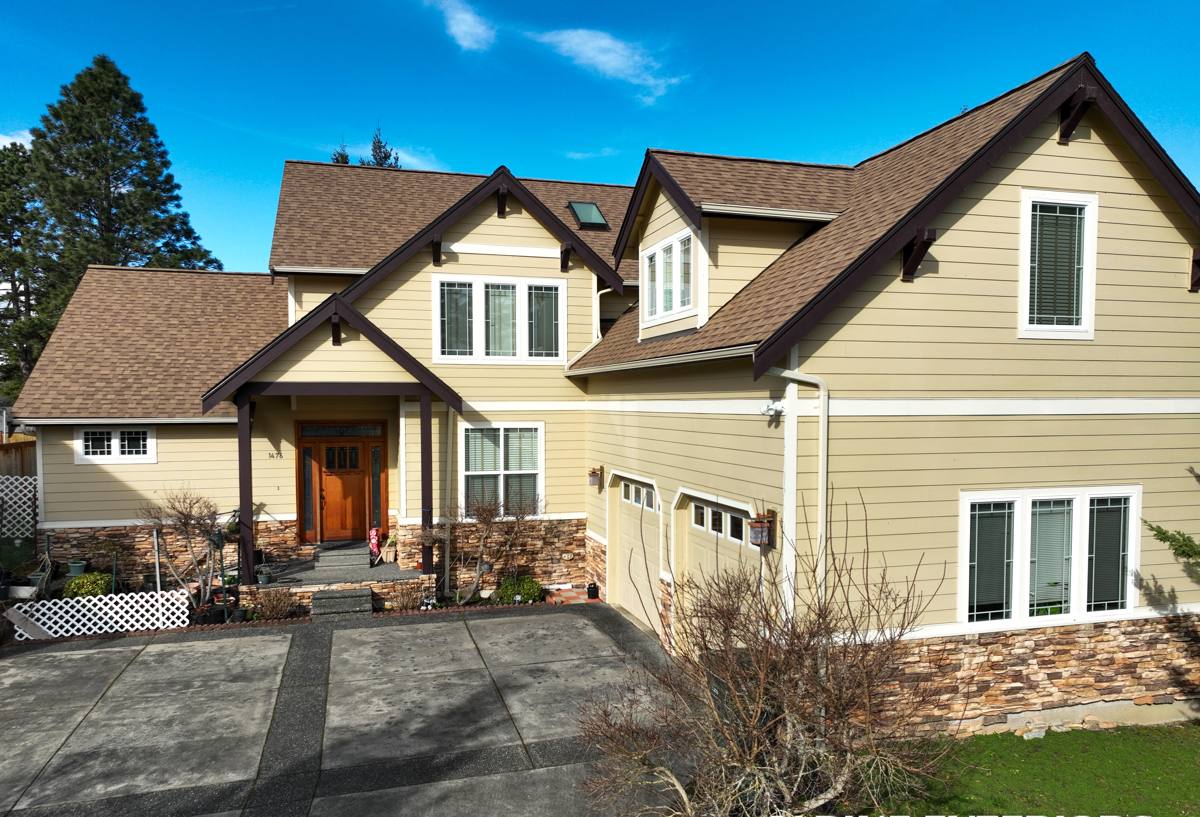
What This Climate Demands From a Siding System
Moisture That Lingers
Sumas doesn't get flash-dry weather. Fog settles in the low ground, humidity from surrounding fields and waterways keeps the air heavy, and tree-lined lots block the sun and wind that would otherwise dry a wall after a storm. Siding here needs to shed water fast and let any moisture that does get behind it escape just as fast — a wall that stays damp for days at a time is a wall that's building problems.
Moss and Organic Growth
Wherever there's shade and moisture, moss and algae follow. It's one of the most common complaints we hear from homeowners in this area, and it's not just an appearance issue — moss holds water against a surface, and on a product that isn't dimensionally stable, that constant dampness accelerates rot, swelling, and paint failure.
Wind and Temperature Swings
Sumas is exposed to stronger, colder winter winds than a lot of the rest of the county, thanks to its position near the mountain gap that channels cold air down from the east. That means siding here takes real wind-driven rain, not just a light coastal drizzle, and it needs fasteners and joints that won't work loose or crack under repeated freeze-thaw and wind-load cycling.
What a Correct Siding Installation Actually Involves
A lot of siding problems trace back to installation shortcuts, not the material itself. Getting it right in a wet valley climate means paying attention to the parts of the job nobody sees once the siding is up.
Weather-Resistive Barrier and Flashing
Every wall gets a continuous weather-resistive barrier, properly lapped, with flashing integrated at every window, door, and penetration so water is directed out and down — never trapped behind the cladding. This is the layer that actually keeps a house dry; the siding is the second line of defense, not the first.
Drainage Gap Behind the Siding
In a climate where walls stay damp longer, a drainage gap (rainscreen) between the barrier and the siding gives any incidental moisture a path to drain and air to circulate, so the wall assembly can actually dry instead of staying saturated. On shaded, moss-prone elevations, this detail matters more than most homeowners realize.
Fastening, Gapping, and Joint Treatment
Fiber cement has to be fastened per the manufacturer's specifications — correct nail placement, spacing, and depth — with proper expansion gaps at joints and trim, and factory or field-applied sealant only where it's actually called for. Overdriven fasteners, missing gaps, and caulk used as a substitute for correct flashing are the most common installation mistakes we see when we're called out to fix someone else's work.
Why We Install Only James Hardie Fiber Cement
We don't offer vinyl, LP SmartSide, primed wood, cedar, or other fiber cement brands. That's a deliberate standard, not a limitation of what we know how to install. In a valley climate with heavy moisture and long moss seasons, the material matters as much as the workmanship.
| Factor | James Hardie Fiber Cement | Vinyl Siding | Wood / LP SmartSide |
|---|---|---|---|
| Moisture behavior | Dimensionally stable; doesn't swell or rot when installed to spec | Doesn't absorb water, but can warp and gap in temperature swings | Wood-based core absorbs moisture if any gap in protection fails |
| Moss and mildew resistance | Factory ColorPlus finish resists staining and holds up to washing | Surface can stain and support moss/algae growth in shaded areas | More vulnerable to surface growth and moisture-driven damage |
| Fire resistance | Non-combustible core | Combustible, can melt or deform near heat | Combustible |
| Expected lifespan (installed to spec) | Multiple decades with proper maintenance | Variable; prone to cracking and fading over time | Shorter if moisture protection is compromised |
| Warranty structure | Strong transferable manufacturer warranty | Varies widely by manufacturer and grade | Varies; often shorter or more conditional |
Vinyl is inexpensive and low-maintenance in mild climates, but it's a combustible plastic product that can warp, fade, and crack over time, and it doesn't hold up as well cosmetically in shaded, moss-prone conditions. Wood and wood-based products like LP SmartSide can look great and perform well, but they depend entirely on an unbroken moisture barrier — any lapse in flashing, caulking, or maintenance and the core is exposed to the kind of sustained dampness Sumas sees for months at a time. James Hardie's fiber cement is engineered specifically for climates like this: it won't rot, it resists moss staining far better than painted wood or bare vinyl, it's non-combustible, and the ColorPlus factory finish is built to hold color under UV and moisture exposure without the homeowner having to repaint every few years.
Our Installation Process
Every Sumas project follows the same disciplined sequence, whether it's a full re-side or a targeted section replacement.
- On-site assessment: we check the existing wall assembly, moisture damage, trim condition, and any problem areas — especially shaded and north-facing walls where moss and rot tend to concentrate.
- Tear-off and substrate check: old siding comes off and we inspect sheathing for hidden rot or damage before anything new goes on.
- Weather barrier and flashing: a continuous water-resistive barrier is installed with correctly lapped and integrated flashing at every opening.
- Drainage gap installation: a rainscreen gap is built in so the wall can drain and dry, not just shed surface water.
- Hardie panel or plank installation: installed to manufacturer fastening specs, correct gapping at joints and trim, and consistent reveal lines.
- Trim, caulking, and finish detail: final sealant only where specified, clean trim lines, and a walkthrough with the homeowner.
Signs Your Current Siding Is Already Failing
Because Sumas walls stay damp longer than drier parts of the region, siding problems here often show up as slow, creeping issues rather than sudden failures. Watch for:
- Persistent moss or dark green/black streaking on shaded or north-facing walls
- Paint that's peeling, bubbling, or chalking well before you'd expect a repaint
- Soft or spongy spots when you press on siding or trim, especially near the bottom courses
- Visible gaps, warping, or buckling panels, particularly after a cold snap
- Water stains or discoloration on interior walls near exterior corners or window openings
- A musty smell in a room along an exterior wall, which can point to moisture trapped behind the cladding
Maintenance After a Proper Installation
Fiber cement siding installed to spec is low-maintenance, not no-maintenance. A yearly rinse to knock down moss and organic buildup, especially on shaded elevations, keeps the ColorPlus finish looking right and prevents growth from taking hold. Keep an eye on caulking at trim joints and have any gutter or downspout issues addressed quickly — a lot of siding damage in this area actually starts with water overflowing from a clogged gutter onto the wall below, not with the siding itself failing.
What Affects the Cost of a Sumas Siding Project
We don't quote pricing without seeing the house, but a few factors consistently move the number for local projects:
| Factor | Why It Matters |
|---|---|
| Wall condition and hidden damage | Rot or damaged sheathing found during tear-off has to be replaced before new siding goes on |
| House size and complexity | More corners, gables, and trim detail mean more labor and material cuts |
| Siding profile chosen | Lap, shingle, and panel Hardie products vary in material and labor cost |
| Access and site conditions | Tree cover, tight lot lines, and slope can add setup and staging time |
| Trim and detail work | Custom trim, fascia, and soffit work adds to scope beyond the field siding |
Why Hire a Crew That Already Works in Sumas
A crew that regularly works Whatcom County knows what this valley does to a wall over a decade — where moss takes hold first, how far wind-driven rain travels under an eave, and which details actually matter versus which ones are just extra steps. That local pattern recognition shows up in the small decisions on a job: where to add extra flashing attention, how to handle a particularly shaded elevation, and how to sequence work around the area's wet stretches. We install one product, to one standard, on every job — which means the crew on your Sumas home has done this exact installation many times before, not learned it on your house.
If you're planning new siding, dealing with an aging installation, or just want an honest read on what your home needs, we're happy to take a look. Reach out for a free, no-pressure estimate — there's a form right below this page to get started.