 Blaine Siding
 Salt Air, Driving Rain, and Moss: What Blaine Harbor Siding Is Up Against
Homes around Blaine Harbor sit in one of the harder climates in Whatcom County to keep siding healthy. The harbor and the open water of Semiahmoo Bay put salt-laden air directly on exterior walls, day in and day out. That salt air doesn't just look bad as a haze on windows and railings — it accelerates corrosion on fasteners, trim, and any siding product that isn't built to handle it. Add wind-driven rain that comes off the water sideways instead of straight down, and you get moisture pushed into seams, laps, and fastener holes that a calmer inland home would never see.
Then there's moss. Blaine's marine climate means long stretches of damp, mild weather where north-facing and shaded walls stay wet for days at a time. That's exactly the environment moss and algae need to take hold. Once organic growth establishes on a wall, it holds moisture against the surface even longer, which speeds up whatever damage is already starting underneath.
None of this means siding on a Blaine Harbor home is doomed — it means the margin for error is smaller. A minor gap, a missed caulk joint, or a piece of trim that was never properly flashed will show problems here years before it would on a home twenty miles inland. That's the reality we design every repair around.
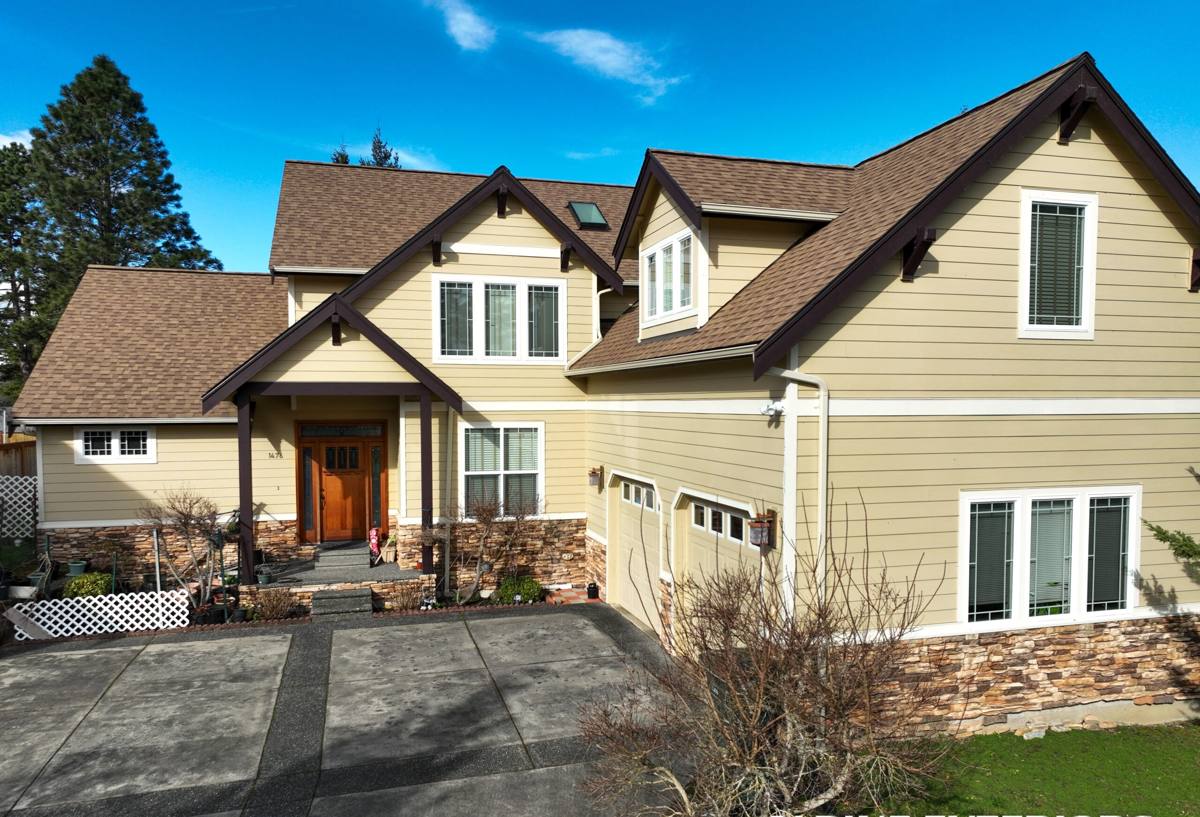
Warning Signs It's Time for a Repair
Most siding repairs we do near the harbor start with something a homeowner noticed on a walk around the house, not a full-blown failure. Catching these early is what keeps a repair a repair, instead of turning it into a replacement.
Visual and Physical Signs
- Soft or spongy spots when you press on the siding, especially near the bottom courses or around windows
- Visible cracking, splitting, or bubbling paint or finish
- Persistent moss, algae, or black streaking that comes back soon after cleaning
- Gaps opening up at seams, corners, or where siding meets trim, windows, or doors
- Rust staining bleeding from fastener heads or metal flashing
- Warping or buckling panels, particularly on walls that face the water or prevailing wind
Signs Inside the House
Sometimes the first clue isn't on the exterior at all. Peeling interior paint near exterior walls, a musty smell in a closet that backs up to an outside wall, or a slightly soft spot in interior trim can all point to moisture that's already worked its way through the siding and sheathing. These are worth a look sooner rather than later, since by the time they show up inside, the damage outside has usually been developing for a while.
What a Correct Siding Repair Actually Involves
A siding repair that's done right is not just cutting out a damaged board and nailing in a new one. In a harbor environment, a rushed patch almost always fails again within a season or two, because it never addressed why the original section failed.
Diagnosing the Cause, Not Just the Symptom
Before we touch a single board, we look at what let water or moisture reach that spot in the first place. That could be a missing kick-out flashing above a roof line, caulking that's dried out and cracked, a fastener pattern that split the material years ago, or simply a low spot where wind-driven rain concentrates. If we replace the damaged piece without fixing the cause, the new material fails the same way the old material did.
Checking What's Behind the Siding
Once damaged siding is removed, we check the house wrap or building paper, the sheathing, and any framing underneath for rot or hidden moisture. This is the step that gets skipped by crews trying to move fast, and it's the one that matters most. Siding is the visible layer, but the water-resistive barrier and sheathing behind it are what actually protect the structure. If those are compromised, replacing the siding alone just hides the problem for a while longer.
Matching Materials the Right Way
Repairs also need to match — in material, profile, and finish — so the patch doesn't stand out or perform differently than the surrounding siding. Mixing incompatible materials at a repair seam, or using fasteners that aren't rated for the product, is a common shortcut that creates a new weak point right where you just fixed one.
Repair or Replace? How We Make That Call
Not every damaged section needs full replacement, and not every repair is worth doing if the underlying siding is near the end of its service life. Here's how we generally think through it with homeowners.
| Factor | Points Toward Repair | Points Toward Replacement |
|---|---|---|
| Extent of damage | Isolated to one or two areas | Recurring problems across multiple walls |
| Cause of damage | Identifiable and fixable (flashing, caulk, impact damage) | Systemic — original installation or product issue |
| Sheathing condition | Sound once opened up | Soft, rotted, or water-damaged in multiple spots |
| Age of existing siding | Mid-life, otherwise in good shape | Near or past expected service life |
| Material match availability | Matching product/color still obtainable | Discontinued profile or faded beyond match |
We'll always tell you honestly which side of that table your home falls on. A well-targeted repair can add years of protection at a fraction of replacement cost — but we won't recommend patching a wall that's going to need the same repair again in eighteen months.
Our Process for Blaine Harbor Siding Repairs
- Inspection: We walk the full exterior, not just the area you flagged, since damage from wind-driven rain often shows up in more than one spot on harbor-facing homes.
- Diagnosis: We identify the moisture source or physical cause behind each damaged area before quoting the fix.
- Removal and inspection behind the siding: Damaged material comes off carefully so we can check house wrap, flashing, and sheathing underneath.
- Repair the root cause: Flashing, caulking, or drainage details get corrected — not just covered up.
- Reinstall with matching material and correct fastening: Repairs are installed to the same standard as new construction, including proper fastener spacing and clearances.
- Finish and blend: Where possible, we match paint, caulk lines, and reveal so the repair reads as part of the wall, not a patch.
Why We Repair and Rebuild With James Hardie, Not Vinyl or Wood
When a repair calls for new material — whether it's a few boards or a full wall section — we use James Hardie fiber cement. It's the only siding product we install, and that standard applies to repairs just as much as full replacements.
In a salt-air, high-moisture environment like Blaine Harbor, the reasons matter more than usual. Fiber cement doesn't rot, and it isn't a food source for the moss and algae that thrive in this climate the way wood siding can be. It's also non-combustible, which is a real consideration anywhere wildfire smoke and ember exposure have become a broader regional concern in the Pacific Northwest. Hardie's ColorPlus factory finish is baked on and warranted against fading and peeling, which matters on a home facing years of sun, salt spray, and rain — a job-site paint job on a repair patch almost never holds up the same way over time.
We don't install vinyl siding, LP SmartSide, or engineered wood products, and we won't use them to patch a repair either. Vinyl can warp and become brittle with UV and temperature swings, and its seams and J-channels give wind-driven rain more places to work its way behind the wall over time. Engineered wood products depend heavily on maintaining an intact factory coating — once that's breached by an impact or a poorly sealed cut edge, moisture can get into the substrate faster than most homeowners expect. These aren't reasons to think less of a home that already has one of these products; they're the reasons we made fiber cement our standard, and why our repairs are built to that standard even when the surrounding siding is something else.
Why Hiring a Crew That Already Works Blaine Harbor Matters
Siding repair looks straightforward from the street, but the details that actually matter — where wind-driven rain concentrates on a given elevation, how much salt exposure a wall gets based on its orientation to the water, how aggressively moss returns on a shaded north wall — are things you learn by working this specific stretch of Whatcom County, not by reading a general installation manual.
A crew that's repaired siding on other homes near the harbor already knows which failure points show up again and again in this environment: the flashing details that get skipped during original construction, the caulk joints that dry out faster in salt air, the corners that take the worst of the prevailing wind. That local pattern recognition means fewer surprises once we open up a wall, and a repair that's built for the conditions your home actually faces — not generic conditions from a different climate.
A Homeowner's Maintenance Checklist Between Repairs
A repair holds up longer when it's paired with basic upkeep. This is the routine we recommend for homes in the Blaine Harbor area to catch small problems before they need a repair crew.
- Rinse siding gently once or twice a year to remove salt residue, especially on walls facing the water
- Treat or remove moss promptly rather than letting it spread — don't pressure-wash aggressively, which can force water behind seams
- Check and refresh caulking at trim, window, and door joints every couple of years
- Walk the exterior after major windstorms to check for loosened panels, trim, or flashing
- Keep gutters clear so overflow isn't running down siding walls
- Trim back vegetation that keeps a wall shaded and damp longer than it needs to be
If you're seeing damage, softness, or recurring moss on your siding, we're happy to take a look and give you a straight answer on what's causing it and what it will take to fix. Reach out for a free, no-pressure estimate — the form below only takes a minute.