 Blaine Siding
 Siding Replacement in Everson: What the Nooksack Valley Climate Does to a House
Everson sits inland along the Nooksack River, away from the direct salt spray you get right on Semiahmoo Bay, but it is still squarely inside Whatcom County's marine weather pattern. The same low-pressure systems that push driving rain and salt-tinged air across Blaine roll straight through the valley, and the tree cover and river-bottom humidity around Everson add their own problem: a moss and algae season that runs longer than most homeowners expect. Siding here doesn't fail because of one bad storm. It fails slowly, from years of moisture sitting against the wrong material, tree shade keeping north-facing walls damp long after the rest of the house has dried, and freeze-thaw cycles working on any siding that wasn't sealed and fastened correctly the first time.
A siding replacement in Everson has to be planned around that reality, not around a generic install spec written for a drier climate. That means the right material, the right water management behind the cladding, and installation details that account for shaded, damp exposures as much as the sunny side of the house.
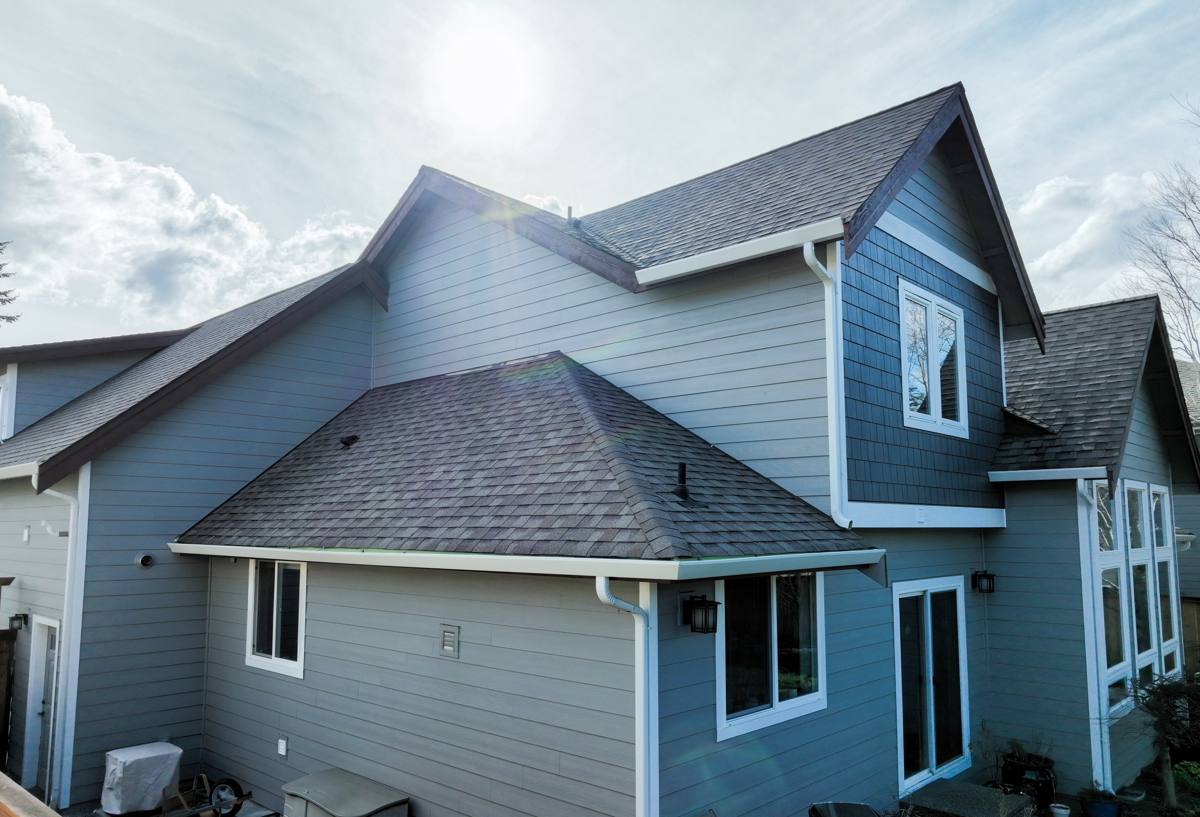
Signs an Everson Home Needs Siding Replacement, Not Another Repair
Patching is worth doing when the damage is isolated and the material underneath is sound. Once a few of these show up together, you're usually looking at a full replacement:
- Soft or spongy spots when you press on the siding, especially near the bottom courses or under windows
- Persistent black or green streaking that comes back within weeks of being cleaned
- Cracked, bowed, or delaminating panels, particularly on older wood-based or engineered wood siding
- Paint that won't hold — bubbling, peeling, or needing a full repaint every two to three years
- Visible gaps at seams, corners, or trim where caulking has failed repeatedly
- A musty smell or discoloration on interior walls that back up to exterior siding
- Warping or rippling on shaded, north-facing walls that never fully dries out between storms
Why We Only Install James Hardie Fiber Cement Here
We install one siding system on every home we work on: James Hardie fiber cement, in the HZ product lines engineered for our climate zone. That's not a marketing preference — it's a decision built around what actually holds up in a place with this much sustained moisture and a moss season that can run eight or nine months out of the year.
Moss, Moisture, and Wood-Based Sidings
Wood-based products — cedar, primed spruce, engineered wood siding like LP SmartSide — perform fine in dry climates and can look good here for the first few years. The trade-off shows up over time: wood fiber absorbs moisture, and once it does, it's an ideal surface for moss, algae, and eventually rot to take hold, especially on the shaded walls common around tree-lined Everson lots. These products can work, but they demand a level of ongoing sealing, painting, and moisture vigilance that most homeowners don't sign up for when they choose them.
Vinyl in a Valley That Sees Real Temperature Swings
Vinyl siding is inexpensive and low-maintenance in the sense that it doesn't need repainting, but it's a thin plastic product that expands and contracts with temperature and can crack or warp in a hard freeze — something the Nooksack Valley gets most winters. It also isn't fire-resistant, doesn't hold paint if you ever want to change the color, and tends to look visibly dated well before it fails structurally.
What James Hardie Does Differently
Hardie fiber cement is engineered from cement, sand, and cellulose fiber — it doesn't feed moss the way wood does, it's non-combustible, and it holds a factory-applied ColorPlus finish that's warrantied against fading and cracking far longer than field-applied paint. The HZ5 formulation is specifically engineered for climates like ours, with moisture and freeze-thaw performance built into the product rather than relying entirely on maintenance to keep it intact.
| Material | Moisture & Moss Resistance | Maintenance | Typical Lifespan |
|---|---|---|---|
| James Hardie Fiber Cement | Strong — cement-based, doesn't feed moss growth | Occasional wash; factory finish holds color | 30+ years |
| Vinyl | Moderate — doesn't rot, but can crack in freeze cycles | Low, but color fades and can't be repainted well | 15–25 years |
| Cedar / Primed Wood | Weak without diligent upkeep | High — regular sealing, painting, moss treatment | 10–20 years, shorter if neglected |
| Engineered Wood (LP SmartSide) | Moderate — resin-treated but still wood fiber based | Moderate — edge sealing and paint maintenance matter | 20–30 years with upkeep |
What a Correct Siding Replacement Job Actually Involves
Full Tear-Off and Sheathing Inspection
We don't install over failing siding. A full tear-off lets us actually look at the sheathing underneath — which, on an older Everson home, is often where the real damage has been hiding. Soft or water-stained sheathing gets replaced before anything new goes up. Skipping this step is the single most common reason a "new" siding job fails within a few years.
Weather-Resistive Barrier and Flashing
A correctly installed weather-resistive barrier, properly lapped and taped, is what keeps incidental moisture from ever reaching the sheathing in the first place. Flashing around windows, doors, and any roof-to-wall intersections has to be integrated with that barrier in the right order — not caulked on as an afterthought. This is the layer that does the real work in a climate where wind-driven rain is routine.
Installing to Hardie's Fastening and Clearance Specs
James Hardie publishes exact fastening patterns, clearances from grade and roof lines, and gapping requirements for a reason: the product's warranty depends on it, and its performance in wet climates depends on it even more. That includes keeping proper clearance at the bottom of the siding so it isn't sitting in standing water or snow, and using the specified fasteners so panels don't work loose over time.
Our Process, Start to Finish
- On-site assessment — we walk the exterior, check for moisture damage, and evaluate sun/shade exposure on each side of the house
- Written estimate — a clear scope covering tear-off, sheathing repair allowances, material, and installation, with no vague line items
- Material selection — choosing the right Hardie profile and ColorPlus color for the home and its exposure
- Tear-off and sheathing repair — old siding removed, sheathing inspected and repaired where needed before anything else happens
- Weather barrier and flashing installation — the moisture-management layer goes in correctly before a single piece of siding is hung
- Hardie installation to spec — fastening, clearances, and gapping done to manufacturer requirements
- Final walkthrough — we go over the finished job with you before we consider it done
What Siding Replacement Costs in Everson — And What Drives the Price
Every home is different, but the same handful of factors move the price up or down on most Everson projects:
| Cost Factor | Why It Matters |
|---|---|
| House size and wall complexity | More corners, dormers, and trim details mean more cutting and labor time |
| Sheathing condition | Rot found during tear-off has to be repaired before new siding goes up — this is common on older homes with prior moisture issues |
| Siding profile chosen | Lap siding, board-and-batten, and shingle-style panels differ in material and labor cost |
| Trim and accessory work | Window trim, corner boards, and fascia replacement add scope beyond the field siding |
| Access and site conditions | Tree cover, slope, and setback can affect scaffolding and staging time |
We give a real, written number after we've actually looked at the house — not a phone estimate — because sheathing condition and access genuinely change the scope.
Why a Blaine-Based Crew That Already Works Everson Matters
Whatcom County isn't one uniform climate. A crew that only works in dry inland regions or only works right on the coast can miss details that matter here — how much shade a north wall gets under mature trees, how long moisture sits in a river-valley microclimate versus a coastal one, where moss actually takes hold first on a given lot. We work across Whatcom County, from coastal Blaine to inland communities like Everson, which means we're not guessing at how this specific climate behaves. We've seen what happens when siding is installed to a generic spec versus installed for the conditions the house actually sits in, and it shows up in how long the job lasts.
Local also means accountability. If a question comes up two years after the job is done, you're calling a crew that's still working in your area, not chasing down someone who did one job in Everson and moved on.
Caring for Your New Siding After Installation
Hardie siding is genuinely low-maintenance, but "low-maintenance" isn't "zero-maintenance." A short annual routine keeps it performing the way it's designed to:
- Rinse the exterior once or twice a year with a garden hose to clear early moss and pollen buildup before it sets in
- Trim back tree branches and shrubs so shaded walls get more airflow and sun exposure
- Check caulking at trim and penetrations annually and touch up as needed
- Keep gutters clear so overflow doesn't run down the siding face repeatedly
- Watch for any impact damage after storms and have it addressed promptly rather than left through another wet season
If you're weighing a siding replacement for your Everson home, we're happy to take a look and give you a straightforward, no-pressure estimate — just fill out the form below to get started.