 Blaine Siding
 Why Bellingham Roofs Take a Different Kind of Beating
Bellingham sits close enough to the water, and far enough into the Pacific storm track, that roofs here deal with a combination most inland homes never see: salt-laden air off the Sound, wind-driven rain that comes in sideways during winter fronts, and a moss season that runs longer than almost anywhere else in the state. None of those three things is dramatic on its own. Together, over years, they wear a roof down faster than the shingles' age alone would suggest.
Storm damage repair here isn't just about patching whatever a single windstorm tore loose. It's about understanding how that one storm interacted with a roof that was already dealing with trapped moisture under moss mats, softened fasteners from years of salt exposure, and flashing that's been flexed by freeze-thaw cycles more times than the manufacturer's warranty ever accounted for. A repair that only addresses the visible hole or the missing shingles, without accounting for what the storm exposed underneath, tends to fail again at the next storm.
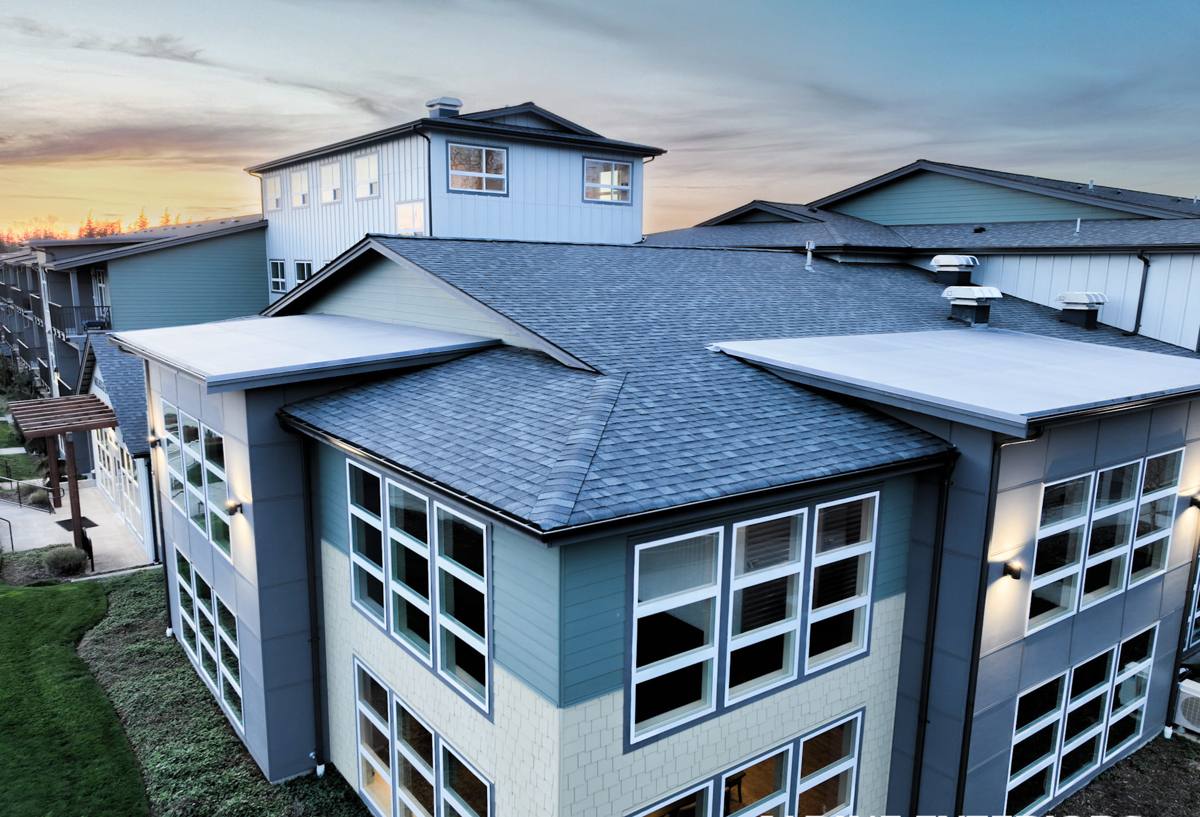
What Actually Counts as Storm Damage
Homeowners often assume storm damage means a tree branch through the roof or a section that's visibly gone. That's part of it, but in Whatcom County, most of the storm damage we're called out for is less obvious:
- Wind-lifted shingle tabs that look intact from the ground but have broken their seal, letting wind-driven rain track underneath
- Flashing separation around chimneys, skylights, and roof-to-wall joints, where repeated gusts work fasteners loose over several storm cycles
- Granule loss from horizontal, high-velocity rain that erodes the shingle surface faster than normal weathering
- Moss-related lifting, where a storm's rain load finishes the job moss started by holding moisture against the deck
- Gutter and edge damage that redirects water back under the roofline instead of away from the house
The tricky part is that most of these look minor right after a storm and become expensive only after a second or third storm finds the same weak point. That's why a proper storm damage inspection isn't just checking for a hole — it's a full check of every seam, edge, and penetration a storm could have loosened.
What a Correct Storm Damage Repair Involves
Matching materials, not just covering the gap
A repair that uses the wrong shingle profile, the wrong underlayment weight, or flashing metal that doesn't match what's already on the roof creates a new weak point even if it stops today's leak. Correct repair work means matching the existing roofing system as closely as possible, or explaining clearly when an upgrade — heavier underlayment, better flashing metal — is worth the difference in a climate like this one.
Fixing the cause, not just the symptom
If a storm tore shingles loose because moss had already lifted the courses beneath them, replacing just the torn shingles without addressing the moss and the compromised deck underneath sets up a repeat repair next season. Correct storm work traces damage back to its actual cause before closing anything up.
Sealing for the next storm, not just today's weather
Every exposed nail head, cut edge, and flashing lap gets sealed and fastened to hold through the next round of wind-driven rain — not just patched enough to pass a dry-day inspection.
Our Bellingham Storm Repair Process
- Emergency assessment and tarping — if a storm has left your roof actively leaking or exposed, our first priority is stopping water intrusion, not paperwork. A properly installed tarp protects the deck and interior while we plan the real repair.
- Full roof inspection — we check the storm-damaged area plus every other seam, flashing point, and moss-prone section, since one storm rarely damages just one spot.
- Written scope and photo documentation — you get a clear explanation of what's damaged, what caused it, and what the repair involves, documented well enough to support an insurance claim if you're pursuing one.
- Repair using matched materials — shingles, underlayment, and flashing selected to match your existing roof system and hold up to the next storm, not just this one.
- Final walkthrough — we show you the completed repair and explain what to watch for going forward, particularly around moss regrowth in the repaired area.
How Roof Age Changes Your Storm Risk
A five-year-old roof and a twenty-year-old roof can take the same storm and come away with very different damage. Newer shingles still have full flexibility and a fresh seal, so wind has to work harder to lift them. Roofs past the midpoint of their expected life have already lost some granule coverage and seal strength from years of salt air and rain exposure, so the same gust that barely marks a new roof can tear tabs loose on an older one.
That doesn't mean an older roof automatically needs full replacement after a storm. It means the inspection has to be more thorough, because damage on an aging roof is more likely to extend beyond what's visible from the ground, and a patch repair on a roof nearing the end of its service life is worth weighing against the cost of replacement in the next few years anyway. We'll tell you honestly which situation you're in rather than sell a repair that doesn't make financial sense.
Storm Damage Repair Options and What They Involve
Not every storm-damaged roof needs the same scope of work. The table below outlines general categories of repair, roughly what drives the cost, and what each one typically includes — actual scope always depends on what we find during inspection.
| Repair Type | What Drives the Cost | Typical Scope |
|---|---|---|
| Spot shingle replacement | Number of damaged shingles, roof pitch, access | Replacing individual lifted or torn shingles and resealing tabs |
| Flashing repair | Number of penetrations affected, metal type | Re-securing or replacing flashing at chimneys, vents, skylights, and wall joints |
| Section re-roof | Square footage affected, decking condition underneath | Tearing off and replacing a damaged section down to the deck |
| Moss-related deck repair | Extent of moisture intrusion, deck rot | Removing affected decking, addressing rot, then rebuilding the roofing layers |
| Gutter and edge repair | Linear footage, fascia condition | Re-securing or replacing damaged edge metal so water is redirected properly |
Costs for storm repair in this area generally range from a few hundred dollars for a small, isolated spot repair up to several thousand for a section re-roof with deck replacement. We won't quote a number until we've actually inspected the roof — anyone quoting storm repair pricing sight unseen is guessing.
Working With Insurance on Storm Claims
Many storm repairs in Whatcom County get filed as insurance claims, and the documentation matters as much as the repair itself. We photograph damage before we touch anything, note the likely cause — wind, impact, or water intrusion — and provide a written scope your adjuster can work from. We don't inflate damage to pad a claim, and we don't downplay it to make a fast sale — the goal is an accurate record that supports whatever your policy actually covers.
One thing worth knowing going in: not all storm damage is treated the same in a claim. Sudden wind or impact damage is usually straightforward. Damage that built up gradually from moss and prolonged moisture — even if a storm is what finally caused the leak — can be handled differently depending on your policy's maintenance clauses. We'll tell you honestly which category we think your damage falls into rather than let you find out from the adjuster.
If your insurance company sends an adjuster to inspect the roof, we're glad to walk the roof with them and point out what we found. Adjusters see a lot of roofs, but they don't always know this specific roof's history the way the homeowner and the repair crew do, and having someone on-site who can speak to what changed after the storm — versus what was already there — tends to make the claim process smoother for everyone.
Why a Crew That Already Works Bellingham Matters
Storm damage repair is one of the few jobs where local response time is part of the quality of the work, not just a convenience. A tarp that goes up within hours of a storm protects a roof deck that a tarp installed three days later can't save. A crew that's already based up here in Whatcom County, rather than dispatched from further south, gets to a leaking roof faster when it matters most.
There's also a knowledge advantage that doesn't show up until you compare repairs side by side. A crew that regularly works roofs in Bellingham and the surrounding county already has a feel for which flashing details tend to fail first in this salt air, which north-facing slopes hold moss longest, and which storm patterns tend to hit this stretch of coastline hardest. That's not something a contractor passing through on a single job picks up — it comes from doing this work here, repeatedly, across different roof ages and exposures.
After the Repair: Keeping the Next Storm From Doing the Same Damage
A good storm repair should reduce, not just fix, your exposure to the next one. A few things worth doing on your own between visits:
- Walk the yard after major storms and check for shingle granules collecting in gutters or at downspouts — a sign of accelerated wear
- Keep gutters clear heading into the fall storm season so water has somewhere to go besides under the roof edge
- Watch shaded, north-facing roof sections for early moss growth and address it before it spreads and lifts shingles
- Note any new interior stains or ceiling discoloration right after a storm — early leaks are far cheaper to fix than ones that have soaked into decking
- Keep tree limbs trimmed back from the roofline, since overhanging branches are a common source of both impact damage and moss spore transfer
If you're not sure whether something you're seeing is storm damage or normal wear, that's exactly the kind of question worth asking before it turns into a bigger repair.
Get a Straight Answer on Your Roof
If a recent storm left you with missing shingles, a new leak, or just a roof you're not sure about anymore, we'll take a look and tell you honestly what we find — no pressure, no inflated scope. Fill out the form below for a free estimate from a crew that already works roofs across Blaine and Bellingham.