 Blaine Siding
 Roof Repair in Sumas: Built for Whatcom County Weather
Homes in Sumas sit in one of the wetter, mossier corners of Whatcom County, and the roof takes the brunt of it. Long stretches of drizzle, driving rain that comes in sideways during winter storms, and a moss season that can run eight or nine months out of the year all wear on shingles, flashing, and gutters in ways that dry-climate roofs never have to deal with. Add in the salt-tinged air that moves through the region off the Salish Sea, and you've got a combination that accelerates corrosion on metal fasteners, valleys, and flashing faster than most homeowners expect.
Blaine Siding Companies repairs roofs across this part of Whatcom County, and Sumas is a regular stop for us. We're not describing your roof from a stock photo or a national franchise script — we're describing the same conditions we see on job after job in this area, and the same failure patterns that show up on a Sumas roof year after year if they're not addressed.
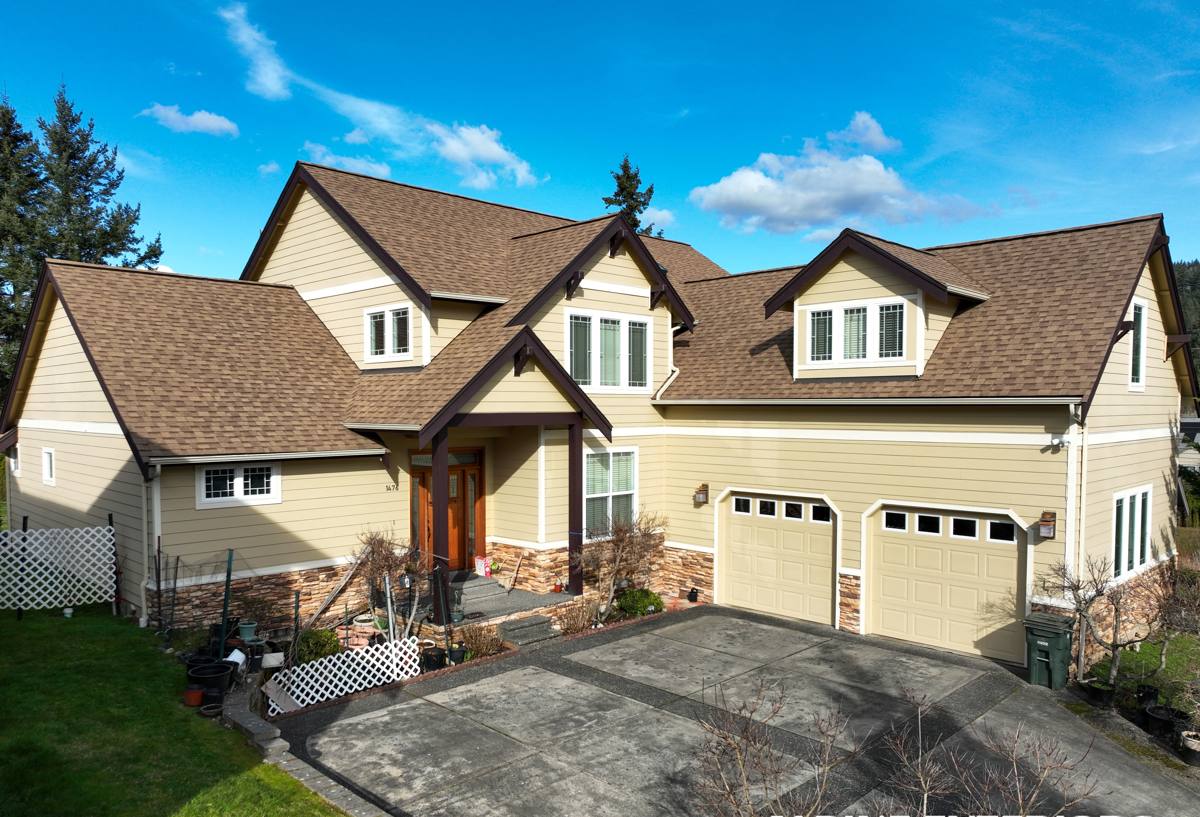
Why Roofs Fail Faster Here Than the National Average Suggests
Moss Is the Slow Killer
Moss doesn't just look bad. It holds moisture directly against the shingle surface, keeps that section of roof from ever fully drying out, and lifts shingle edges as it grows and spreads. Over a full moss season, that trapped moisture works its way under tabs and into fastener holes, which is where leaks actually start — not at the ridge, but at dozens of small entry points across the field of the roof.
Driving Rain Finds the Weak Points
Straight-down rain is forgiving. Wind-driven rain is not. When storms push rain sideways and upward under shingle tabs, flashing laps, and vent boots, any spot that's already marginal — a nail that's backed out, a sealant bead that's cracked, a flashing lap with too little overlap — becomes an active leak. This is why a roof can look fine in July and start dripping in a January windstorm.
Salt Air and Fastener Corrosion
Metal roofing components — flashing, drip edge, exposed fasteners, and vent stacks — corrode faster when salt-carrying air is part of the regular weather pattern. Once a fastener starts to corrode, it loses holding strength and its seal degrades, which is a slow, easy-to-miss cause of small leaks that show up as ceiling stains long after the actual failure began.
Signs a Sumas Roof Needs Repair Now, Not Later
- Granules collecting in gutters or at downspout outlets — a sign shingles are wearing thin
- Dark streaking or thick moss growth on north-facing slopes or shaded sections
- Curling, cupping, or lifted shingle edges, especially on south and west exposures
- Rust staining below metal flashing, vent boots, or exposed fasteners
- Soft or discolored ceiling patches after a windy rainstorm
- Daylight visible through the attic roof deck, or damp insulation near the eaves
- Sagging in the roofline between rafters, which usually means deck-level moisture damage
Any one of these on its own isn't necessarily an emergency, but ignoring several of them through another wet season is how a $400 flashing repair turns into a $4,000 deck replacement.
What an Honest Roof Repair Actually Involves
A roof repair that's done right isn't just "patch the spot that's leaking and move on." Water travels — a stain on your ceiling is often several feet from where the water actually entered the roof. Our repair process starts with tracing the problem to its real source, not just its visible symptom.
Diagnosis Before Repair
We inspect the full roof plane the leak is on, not just the immediate area, because a single failed flashing lap or worn valley often explains multiple "separate" leaks a homeowner has been dealing with for a while.
Matching the Repair to the Cause
A moss-related leak needs different work than a wind-driven flashing failure. We remove and treat moss properly rather than just scraping the surface, replace compromised underlayment where the deck has been exposed, and reseal or replace flashing with materials suited to this region's moisture and salt exposure — not the cheapest option available.
Checking the Roof Deck
If water has been getting in for a while, the plywood or OSB deck underneath may be soft or delaminated. Repairing shingles over a compromised deck doesn't hold — we check deck condition at every repair point before closing anything back up.
Repair vs. Replacement: How We Help You Decide
Not every roof problem in Sumas needs a full replacement, and we don't push one when a targeted repair will genuinely hold up. The table below covers the factors that actually determine which direction makes sense.
| Factor | Repair Usually Makes Sense | Replacement Usually Makes Sense |
|---|---|---|
| Roof age | Under 15 years, isolated issue | Approaching or past the material's expected service life |
| Leak pattern | Single, traceable source | Multiple unrelated leaks across different slopes |
| Shingle condition | Localized wear or storm damage | Widespread granule loss, curling across most slopes |
| Deck condition | Solid, no soft spots found | Soft, delaminated, or repeatedly wet decking |
| Moss history | Recently treated, manageable growth | Years of untreated moss with visible shingle damage underneath |
| Budget goal | Extend current roof's life a few more years | Stop recurring repair costs for good |
We'll give you a straight answer on which category your roof falls into, including when a repair is the smarter money decision even if a replacement would be the bigger job for us.
Our Roof Repair Process in Sumas
- On-site inspection — we walk the roof (weather permitting) and check the attic side for moisture, staining, and deck condition
- Clear explanation — we show you what we found and explain the likely cause in plain terms, no scare tactics
- Written estimate — a specific scope of work and price, not a vague range
- Repair work — moss removal and treatment, flashing and underlayment replacement where needed, deck repair if required, and shingle or roofing material replacement matched to your existing roof where possible
- Cleanup and walkthrough — debris and old material hauled off, and we walk you through what was done
Materials and Roofing Types We Work On
Sumas homes have a mix of roofing — asphalt composition shingle is the most common, with some cedar shake, metal, and older wood roofs still in service. Each has different repair considerations in this climate:
- Asphalt composition shingle — most common, moderate repair cost, moss and granule loss are the main long-term issues
- Cedar shake — needs more frequent moss management and careful matching of replacement shakes to avoid mismatched weathering
- Metal roofing — durable against moss but requires attention to fastener corrosion and seam sealant over time
- Older wood shingle roofs — often at or past their practical service life; repairs may buy time, but replacement timelines should be discussed honestly
We repair what's on your roof now rather than pushing a switch to a different material unless there's a real, explainable reason — usually maintenance burden or how a material handles sustained moisture — to consider it.
Why It Matters That We Already Work in Sumas
A roofing crew that only occasionally works this far into Whatcom County doesn't have the same feel for how fast moss regrows here, which flashing details fail first in this weather, or how a given roof slope will hold up against winter windstorms. We're not learning the region on your roof. Knowing the local weather pattern also means we plan repair timing around it — moss treatment and flashing work go better in drier windows, and we schedule accordingly rather than rushing a repair into the wettest week of the season.
Being local also means we're reachable if a repair doesn't hold the way it should, or if a new issue turns up after a bad storm. That's a different relationship than a crew that drove in from out of the area for a one-time job.
Simple Maintenance That Extends a Sumas Roof's Life
- Keep gutters clear so water isn't backing up under the lowest course of shingles
- Have moss treated before it thickens, not after it's visibly taken over a slope
- Trim back overhanging branches that keep shaded roof sections perpetually damp
- Get a roof looked at after any major windstorm, even if nothing looks obviously wrong from the ground
- Address small leaks the season you notice them — they don't get cheaper by waiting
If you're dealing with a leak, visible moss damage, or just want an honest read on where your roof stands, we're glad to come take a look. Fill out the form below for a free, no-pressure estimate — we'll tell you what we actually find, not just what's easiest to sell.